


Day 9 Saturday 11/5/24 Renmark to Mannum, cloudy 19
There’s a light mist over the river. After checking the air in the tyres, we head for Waikerie downstream and on the Old Sturt Highway. Once more we pass through small vineyards and glimpse Lake Bonney. This was where Donald Campbell attempted the World Water Speed Record in 1964 to achieve an Australian record of 216 miles per hour (348 Kmh). The vineyards seem to grow in size and the river and its many billabongs snake around in the distance. This is a fascinating area when viewed on the map.

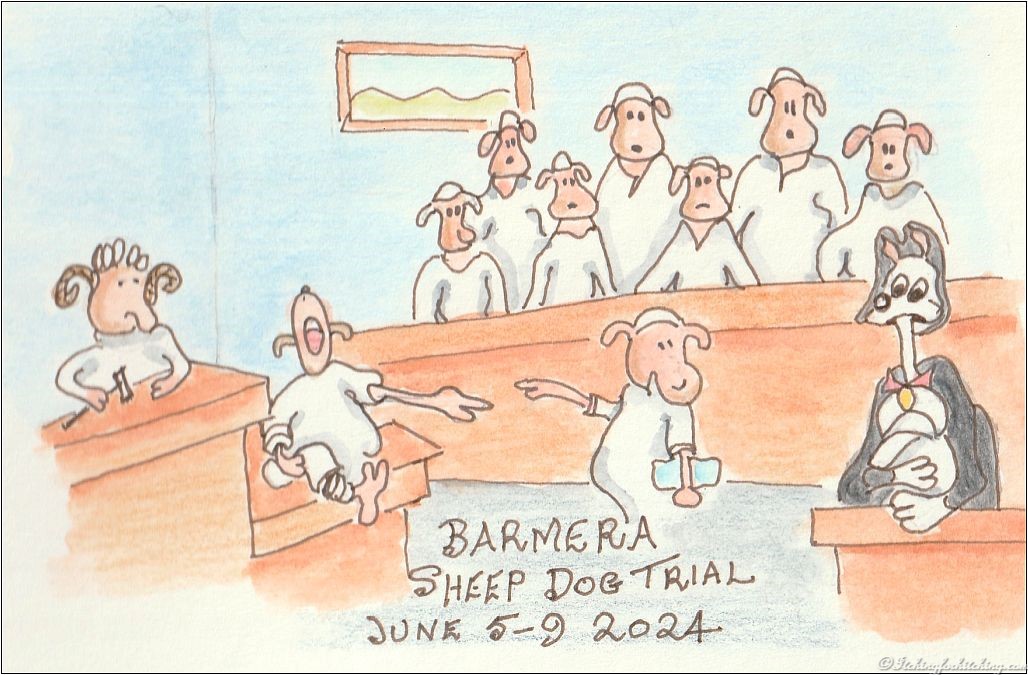
Waikerie is perched on the cliffs above the river. The locals must have a good laugh at the tourists trudging down the hill to the signposted toilets when in reality they’re up the hill. There are some nice old stone buildings and the eponymous Waikerie Bakery is still here. We wonder why the town is so quiet, until we notice the crowd at Saturday morning dog training. And speaking of dog training we happen to notice this billboard for the upcoming Sheep Dog Trials. I didn’t get a chance to photograph it so had to resort to sketching it. My apologies to the artist.
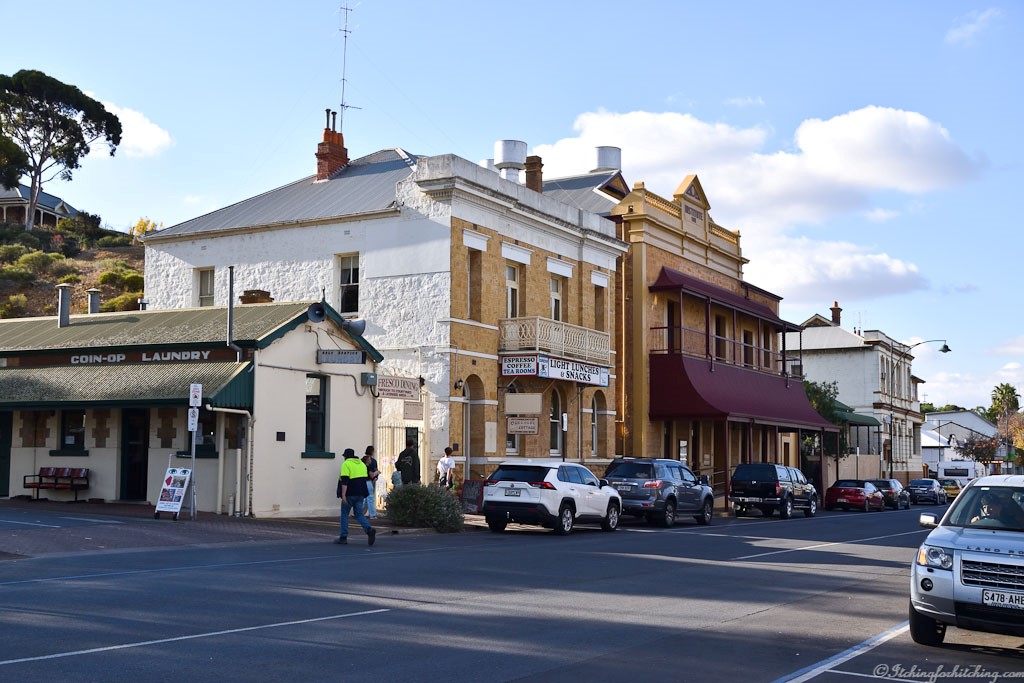
It’s not only the concrete Stobie poles that remind us that we’re in SA but the nature strips (verges) that are gravel instead of grass and front gardens that are abundant with hardy roses amid a ‘lawn’ of gravel. It’s also nice to see new houses being built with the traditional corners of stone.
Our park neighbour at Renmark had suggested that Blanchetown was pretty and worth a visit. We cross a high bridge over the river and follow the signs to the town centre, but give up when we can’t find it. It is only when we are sailing along the main road again that we notice Port Blanchetown. There’s another one for the list of places we’ve missed.
Getting hungry we swing into Swan Reach, only to find a general store, post office, and pub though all seem to be in a siesta, and of course the ferry.
The river now has carved high cliffs around Nildottie and the views are expansive. There are a handful of houses with stunning river views and a few stone ruins.


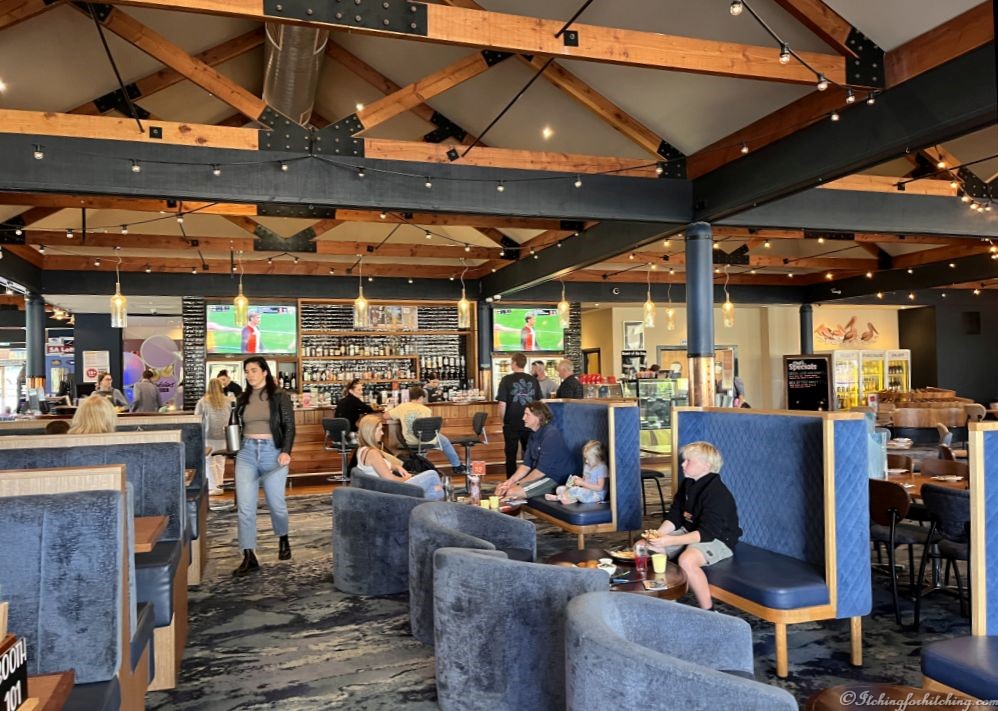
At Mannum we camp at the Haythorpe Reserve beside the river. There are two ferries operating here and the town itself is on the other side. Mannum is the largest town we’ve seen since Waikerie. The historic main street runs parallel to the river and several sets of steps rise steeply to houses perched on the cliff face high above flood levels. By this time, I’m swooning over the iconic limestone architecture and grand old buildings. The Hotel Pretoria (I’d love to know the history behind that name) has a deck overlooking the river and we watch a houseboat pull up to the pub wharf while we tackle a nice chilled white.


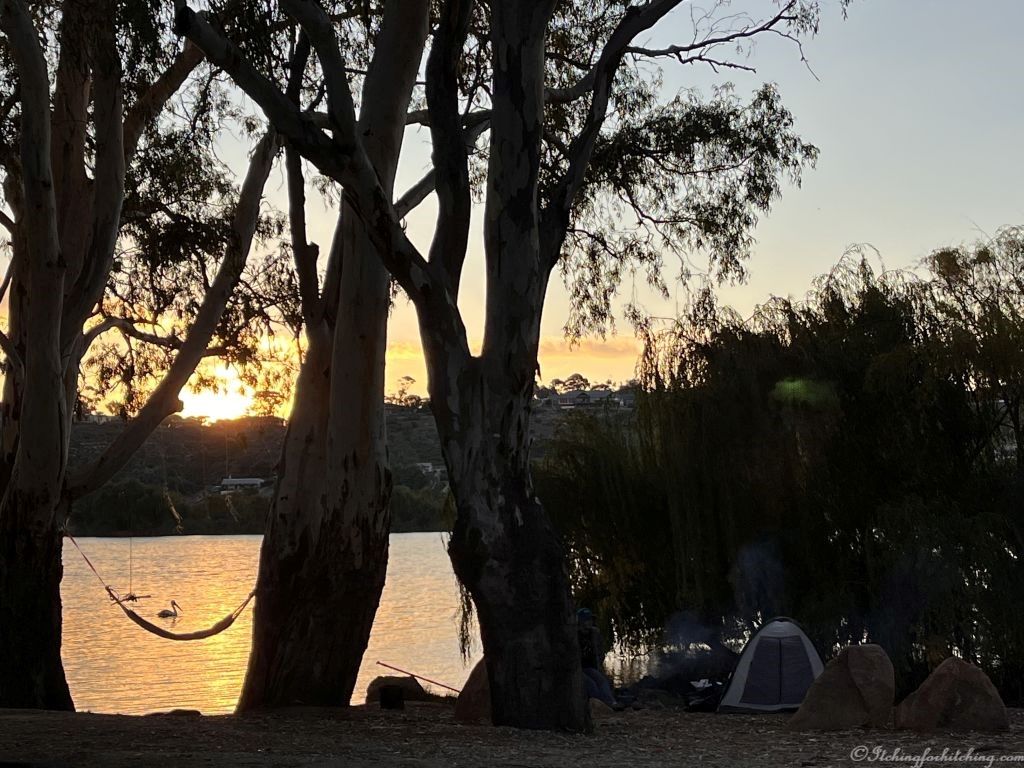
We catch the ferry back to the camp side of the river and watch builders working on houseboats and paddle steamers. Our neighbours all have campfires and judging by the sunset silhouettes there seems to be more loving than eating going on in the tent by the river. Three police cars rock up and search the unruly camp at the far end of the campground that everyone else has parked well away from. The occupants are quietly taken away to sleep more securely.
Dinner is Aldi fried chicken baked in the oven.

Accom: $0, no power, no water, river views. Towing Kms: 193kms

 itchingforhitching
Mannum is one of our favourite river towns and the Pretoria Hotel,is a beauty!
I found out some info on how it got its name- ‘Officially opened on December 22nd 1900, the hotel’s name marked the victory of of British troops over the Boers at Johannesburg and Pretoria’.
My favourite story about the hotel though is when the Murray River had its highest ever flood in 1956, and the water level was at the first floor balcony, but that didn’t stop trade, they just served to those that came by boat.😁
LikeLike
Thanks Glenys, that’s great it makes sense now. Yes, it is a delightful spot. I’d like to return and spend a bit of time poking around Mannum.
LikeLiked by 1 person
Intriguing neighbours
LikeLike
I’d say that some were carried away by the natural beauty and others by illicit substances.
LikeLiked by 1 person
Does each area have its own electricity generating station or is there a regional grid?
LikeLike
I’m no expert, but I’ll give you as much as I can Peter. Each state generates its own power. South Australia in particular has gone completely solar which makes sense. It is a desert state. Victoria has enormous reserves of brown coal but those power stations are shutting down in favour of wind and solar. Tasmania uses hydro power and imports some undersea from Victoria. QLD has reserves of coal in the Bowen Basin that would rival the size of many countries! But they are building massive wind and solar farms for power generation. I’m not sure about WA and the NT as we haven’t been over there recently. NSW is also building large wind and solar farms. The jewel in the crown has been the Snowy Hydro Scheme in the alps between NSW and Victoria. It has serviced both states since it was built after the war. Future wise is a very vocal argument at present as no doubt most would prefer coal usage phased out though it is a valuable export especially for Chinese manufacturing. There is a loud debate for nuclear, which I’d guess will eventually come in after wind and solar have filled the gap. The ‘not in my backyard folks’ seem to overlook that we export an awful lot of yellow cake to the rest of the world and we do have a nuclear reactor in the Sydney suburbs for scientific purposes. Now back to your question, yes we do have a national grid. The majority of homes now have solar on the roof the excess of which goes back to the grid. And it’s not unusual for country properties and some small towns to go off grid. There are also plans for a wind farm in Bass Strait. Cheers!
LikeLiked by 1 person
Wow! Thank you so much for this very comprehensive response. I had to google “yellow cake”! I imagine that a bigger concern for the world is the supply of water. I’m sure that will cause mega problems in the not too distant future.
LikeLike
It’s a mega problem here with our dry climate and cycles of drought and flood. Surely desalination and recycling has to be the answer. No doubt we’ve all drunk recycled water at some stage without knowing it. An astronaut on TV last night quipped that in space today’s coffee is tomorrow’s coffee.
LikeLiked by 1 person
If we can temporarily turn off the disgust mode we can eat or drink anything to survive!
LikeLike
Disgust mode! Love that expression. I think caring for the land with respect would go a long way too.
LikeLiked by 1 person
Definitely!
LikeLiked by 1 person
We’re back in Blighty, parked not far from Beaulieu motor museum, where Donald Campbell’s Bluebird lives these days!
LikeLiked by 1 person
Wow, he was quite the risk taker, poor old Donald.
LikeLiked by 1 person