

April 2024
I recently read an article by someone complaining about the boredom of retirement and no longer having the chance to learn new things. If you are a regular reader of this blog, you’ll know that this really got my goat up!
One of the big surprises of retirement and spending time on the road has been the things that we’ve learned. Not just about caravans and towing. We had to learn that very quickly, and we are still learning eleven years or so after buying our first van. But other stuff too.
Stuff like, navigation and geography, weather and climate, geology, biology, history, agriculture, arts, and culture to name a few.
Uranium – Mary Kathleen
In the winter of 2014 we visited Mary Kathleen an abandoned town site located halfway between Mt Isa and Cloncurry in western Queensland. Uranium was found here in 1954. A town was built for the miners and their families. When the mine closed in 1984 families were given 21 days to vacate the place. All the buildings were sold, houses, shops, and community buildings. The houses were sold for $3000 – $4000 each and most of them went to the nearby towns of Mt Isa and Cloncurry. Even the swimming pool was filled in. Today (2014) there is consideration to reopen the mine site to extract rare earth minerals, for use in mobile phones and the like. The town site is on land held by Rosebud Station and the Campbell family. The only signs of what it once was are the tarred roads and concrete slabs. The Campbell family allows free camping on the site, so it is very easy for one to find a nice even campsite on one of the many slabs. Dotted through the trees we see about twenty vans and campers. There is a delightful gentleman who keeps an eye out for the place and is a wealth of information regarding the history as he used to visit the town as a child. He shows us a memorial containing the ashes of two former residents who loved this place. There is also a small cairn made from scavenged junk that holds a letterbox. This letter box contains traveller’s business cards and a visitor’s book. We feel like we are in the middle of nowhere, yet there are many signatures with today’s date.

Copper – Burra
Copper was discovered in Kapunda, SA in 1842 and Burra, SA in 1845, thus saving the fledgling South Australian colony with a rich new income source. We called into Burra in 2015 on our way west. We were so captivated and knowing that there were family roots there it warranted a return stay and a good poke around in 2018.


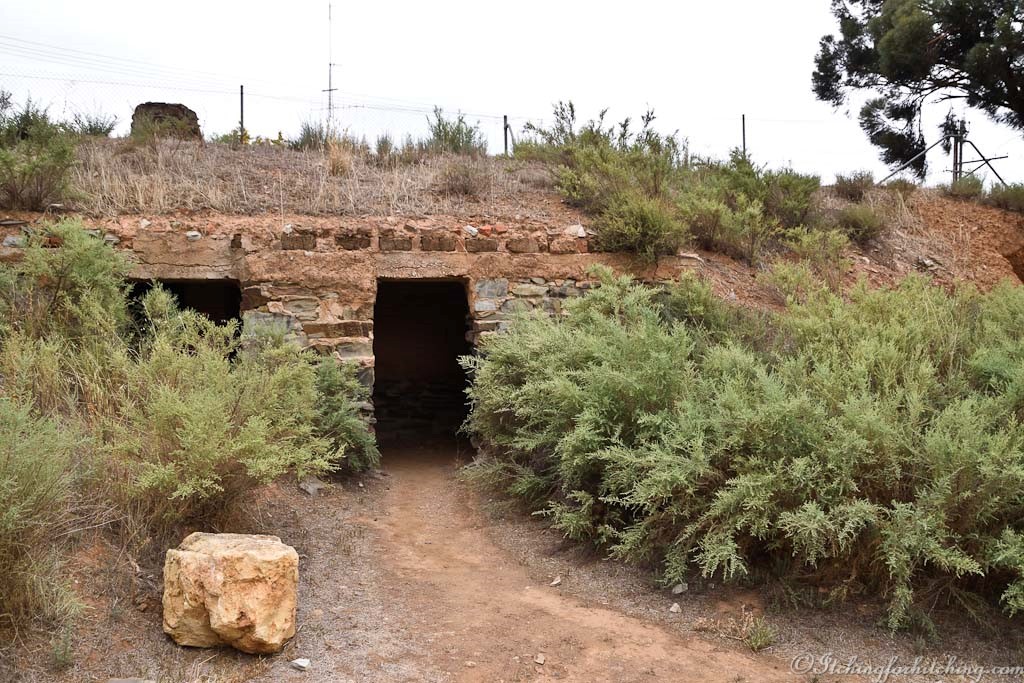
An open-cut mine was dug and referred to as The Monster Mine. Cornish miners built their own dugout homes in the banks of Burra Creek. In the heart of Burra township, these hobbit-like homes pock the walls of the creek. A small room or two each with a little chimney poking from the sod roof. It’s almost impossible to imagine what it would have looked like in its heyday when dozens and dozens of these residences lined the creek banks. When the creek was in flood the miners and their families would take shelter at the Smelter’s Arms Hotel, an inn that was run by Woody’s ancestors…but I’ll leave that colourful story for another day.

Iron Ore – Tom Price
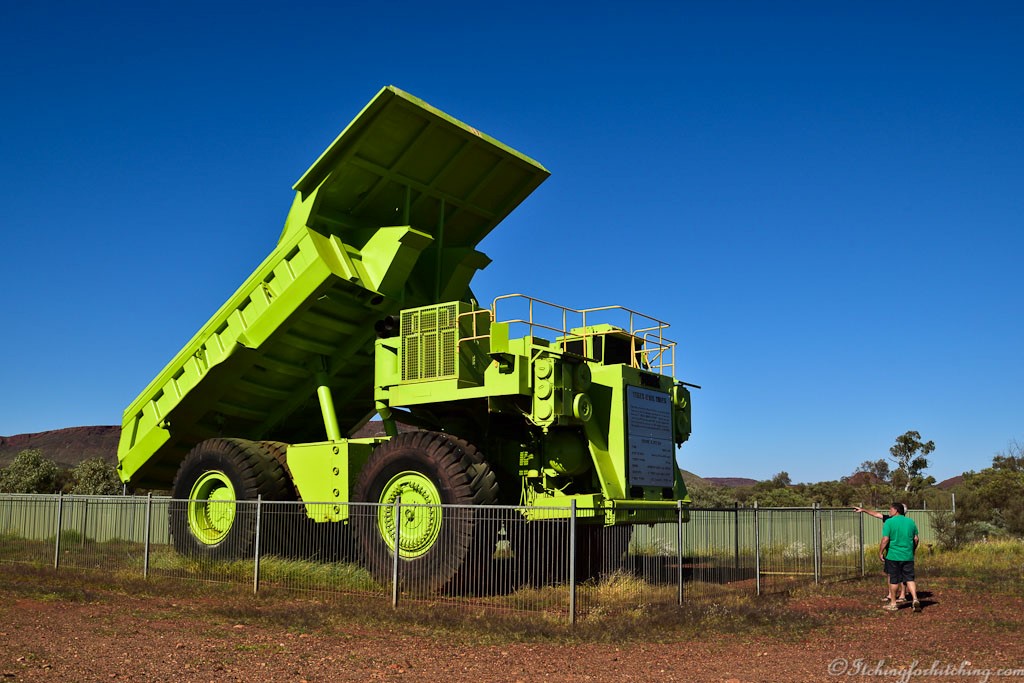
Rio Tinto began mining iron ore at Mt Tom Price in Western Australia’s Pilbara region in 1966. Its success made Mt Tom Price a household name. So much so that it was worth a detour of several days journey to see what was there and to visit nearby Karijini National Park.
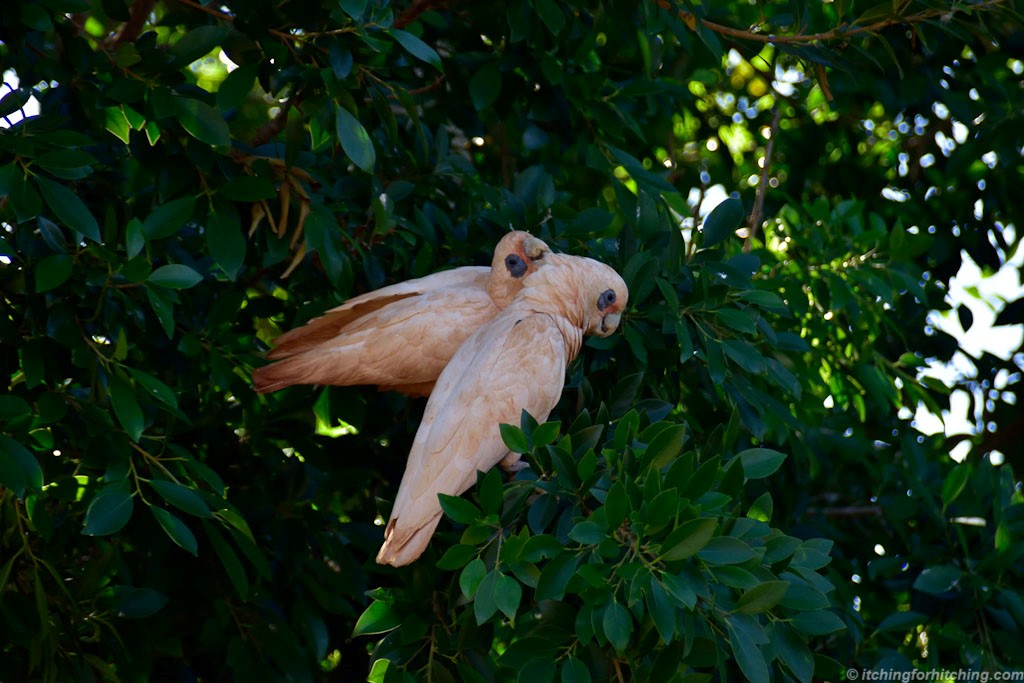
We thought it strange that the town was now referred to as Tom Price, until we took the mine tour. We quickly learnt that the mountain was now a hole! They’re still digging and according to Wikipedia, Tom Price is producing 28 million tonnes of iron ore per year. Tom Price is only one of many mines in the Pilbara region. That red dirt is more than just a pretty colour and even the corellas are pink with iron ore dust.


Coal – Queensland
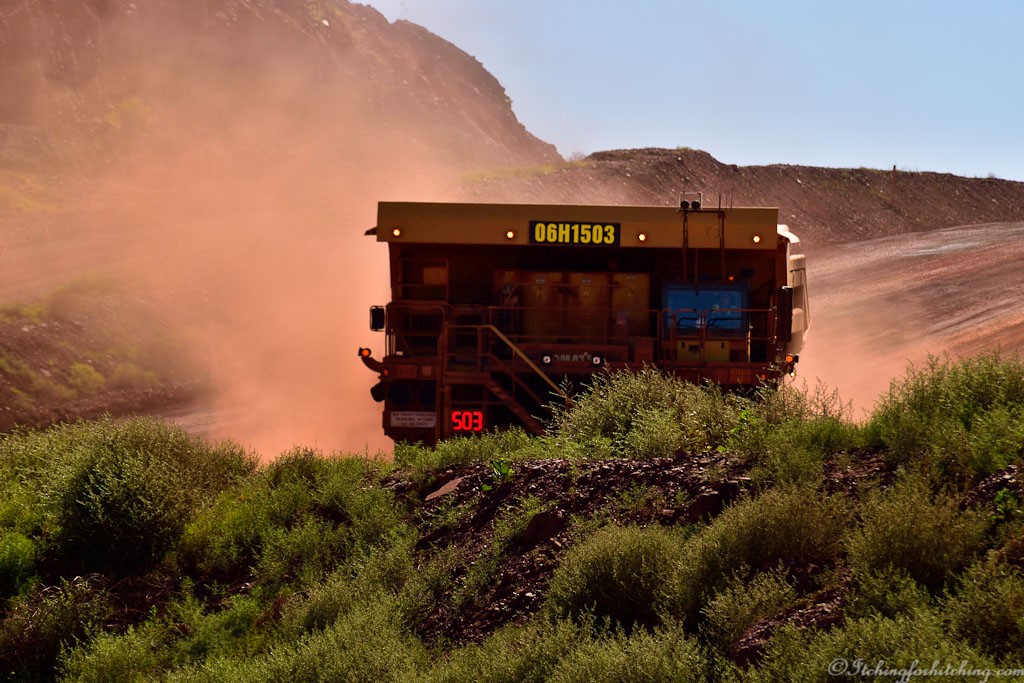
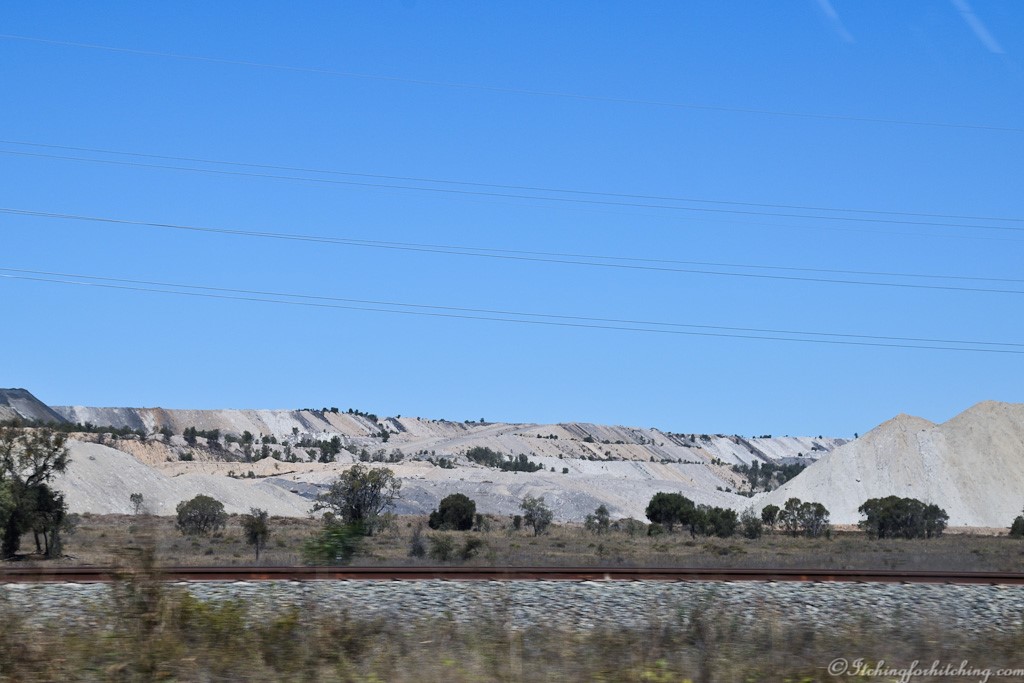
Think Queensland and you may think of swaying palms and warm blue waters. Think again, it’s coal, coal, and more coal. On almost every trip through Qld, we find ourselves crossing coal country. One significant area is the Bowen Basin it is rich in coal and towns like Emerald, Moranbah, Clermont, Moura and many more thrive on the mining industry. Trains transport coal down to the ports of Gladstone / Rockhampton and Mackay to smelters and ships. One such mine, the Dawson at Moura stretches 50kms south to Theodore and heaven knows how far north. “What’s that hill?” It’s still the bloody mine!” And we haven’t even mentioned gold yet, have we?
For an insight into the coal resources in Qld, check out this map from Australia minerals
 itchingforhitching
More fascinating information. Who was Tom Price?
LikeLike
His name was Thomas Moore Price and he was vice president of the American company Kaiser Steel. It was his motivation that led to the development of the mine, though he died before his dream came to fruition. The iron ore rich Hammersley Range was spotted from the air by Lang Hancock. Hancock was sharply intelligent and a larger than life, bold and bombastic fellow (to describe a man who held the newspaper headlines for decades). He and his business partner laid claim to the area and set up Hammersley Iron Pty Ltd with the proviso that they were to receive 2.5% of the mined ore in perpetuity. Hancock’s interests were inherited by his daughter Gina Hancock Rinehart who has proven to be a highly successful business person in her own right. Not only does she have mining and transport interests but she has diversified the business to encompass many spheres. The Tom Price mine is currently operated by Rio Tinto. Thanks for asking the question Derrick, it was a good chance to catch up on a fascinating part of WA mining history.
LikeLiked by 1 person
Much appreciated, Lindsey
LikeLike
Were the original miners mainly all from Cornwall? And if so, does that part of Queensland make any nods these days to the Cornish ancestry, or is it too diluted now?
LikeLike
Funny you should ask, hubby’s ancestors were from around Stithians and were early arrivals into Adelaide. When copper was discovered the two brothers ran coaching businesses and pubs in Kapunda and Burra. The third copper area we are yet to explore is on the Yorke Peninsula, where I’ve heard the Cornish pasties are quite popular. Burra has remained a quaint village having been away from major highways. Hubby’s great grandfather who had been born in Adelaide moved to Melbourne, marrried an Irish Catholic and the Cornish and SA past disappeared into history. I find it fascinating now to dig back through the records as they were an industrious lot.
LikeLiked by 1 person
Industrious indeed. No choice, I suppose. But not industrious convicts, apparently! You’re doing a good job of trailing your ancestors.
LikeLike
Ah, the ace in ancestry. All I’ve found is a poor old butcher who was exiled for knocking off a sheep.
LikeLike
Hence your love of a juicy piece of meat!
LikeLike
🤣
LikeLiked by 1 person
The scale of these enterprises just blows my mind!
LikeLike
And blows up mountains! To drive down into these open cut mines is quite awe inspiring. We’ve been on two tours into open cuts and you can watch the explosions quite safely because they are so far away. We’ve been told by miners that in the underground mine at Broken Hill they have to use traffic lights, there are so many trucks.
LikeLiked by 1 person