


Day 7 Saturday 17/8/2024 Rawnsley Park, 7-16 sprinkles with a sunny arvo
After breakfast, I walk up to Kangaroo Lookout hoping to get a view of three ranges. I sit on an old fencepost and wait for VeeWee and the poodles to arrive. There’s misty rain covering the hills and barely a sound as I ponder the patches of wildflowers and the sheep poo at my feet. That’s the beauty of this place the silence, it is so quiet and up on this saddle there is only the sound of the breeze.


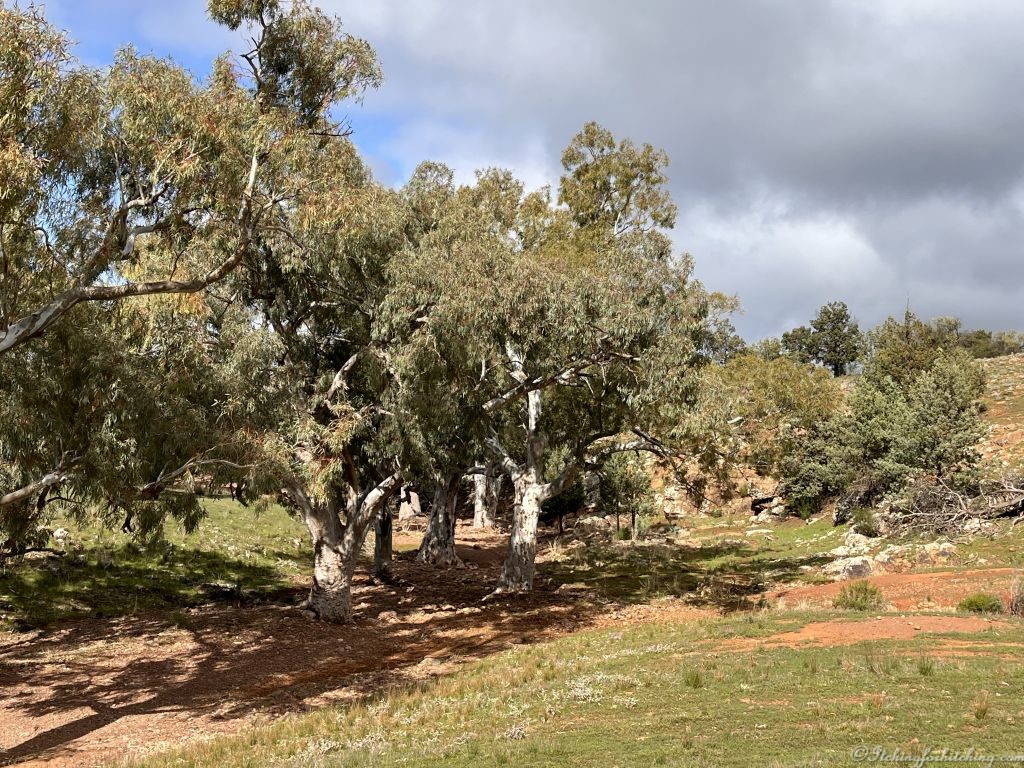
Below us there is a rather pleasant dry creek bed, and we step with caution keeping a watch for the tiny wee wildflowers. The dry creek beds really are the standout in these ranges, strewn with stone and protected by ancient red gums. We return to find that Woody has washed the mud off the car, in readiness for our next foray.

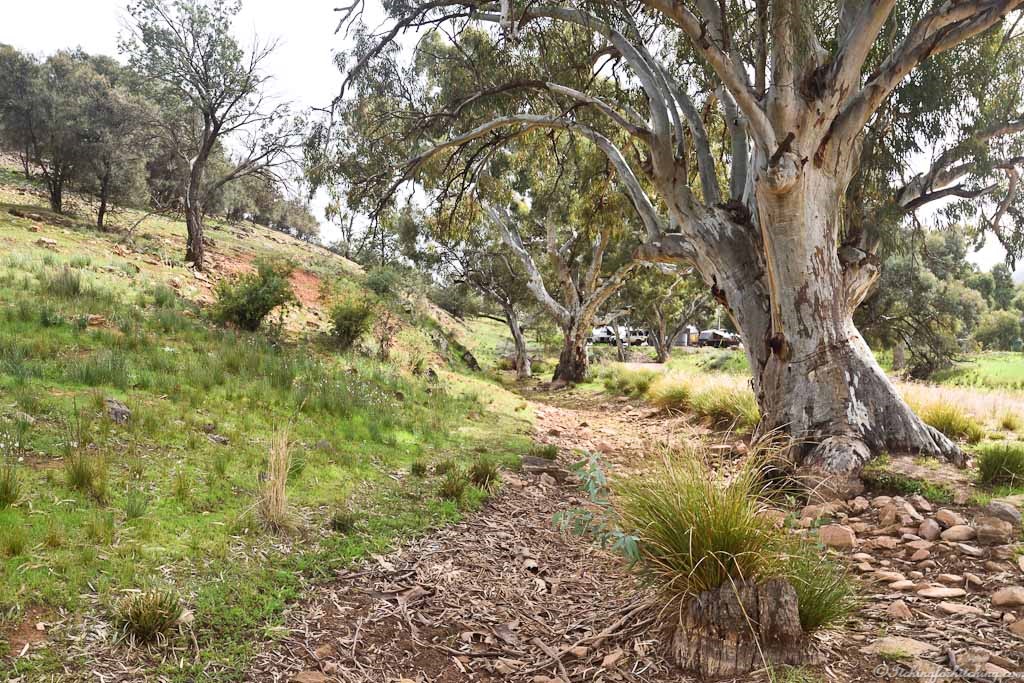
After lunch we leave VeeWee to her footy (we daren’t speak to her when the Lions are playing as she is too busy conversing loudly with the umpire) and we drive into Wilpena Pound which is the main campground of the Ikara Flinders Ranges National Park and situated within the natural amphitheatre formed by the ranges. We are surprised to find that there are only a handful of campers here. The campground is in a delightful grove of native cypress pine and yet today it seems devoid of humans.
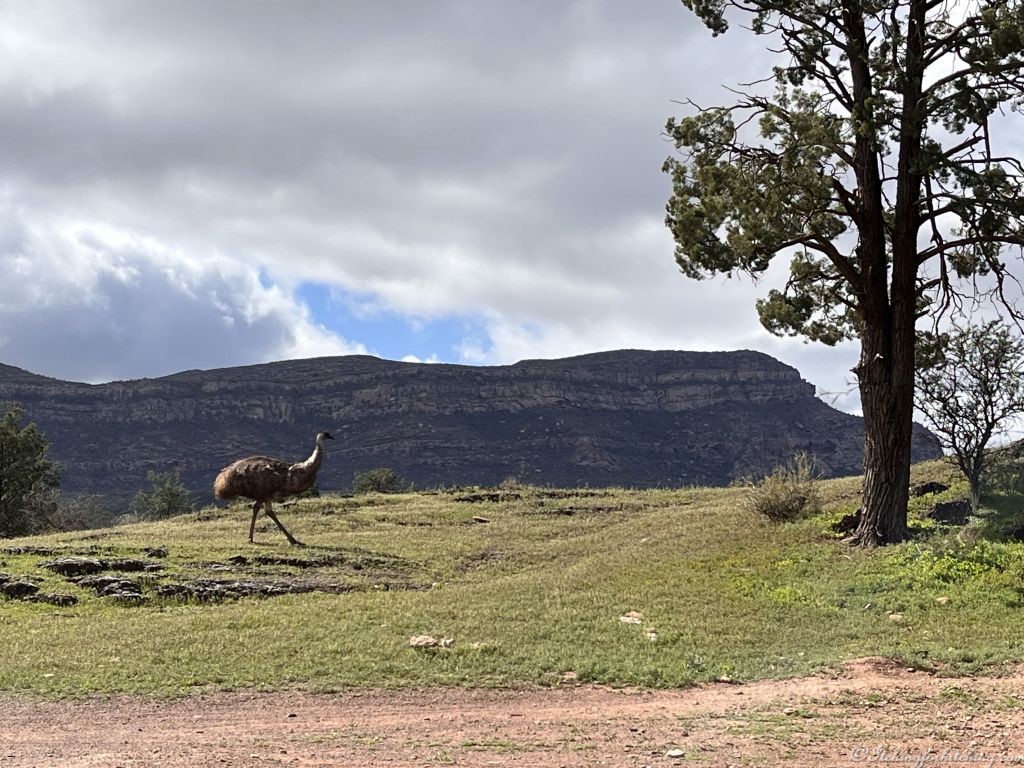
On our way out we notice a sign pointing to old Wilpena Homestead and once more having the place to ourselves with only a mob of kangaroos and 2 emus for company we have a mosey around. The Wilpena Run was taken up in 1851 and continued to operate for 135 years. The homestead is perfectly situated in the lee of the range and surrounded by huge red gums that by their girth must be many hundreds of years old.


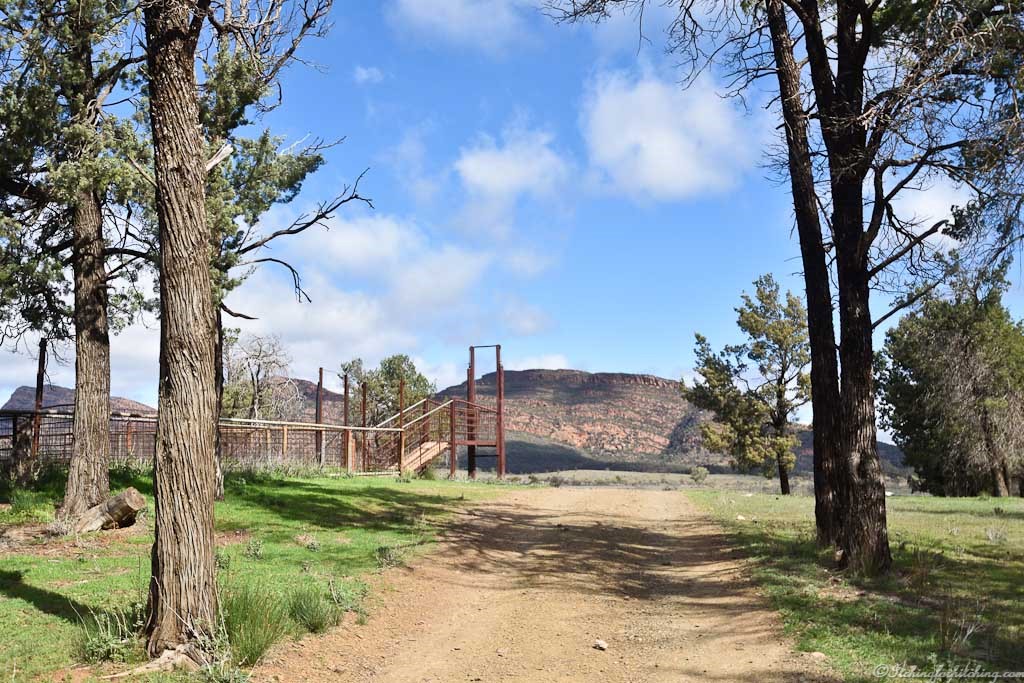

There are stunning views of the surrounding ranges. The homestead built in 1888 is substantial and constructed of stone in the South Australian tradition with a full return veranda. On all sides French doors open to the cool of the veranda. Dotted about the property are buildings of various construction and a 2-storey stone barn that was built in 1851 to house stores. Intriguingly the shelves are suspended from the rafters to evade vermin.


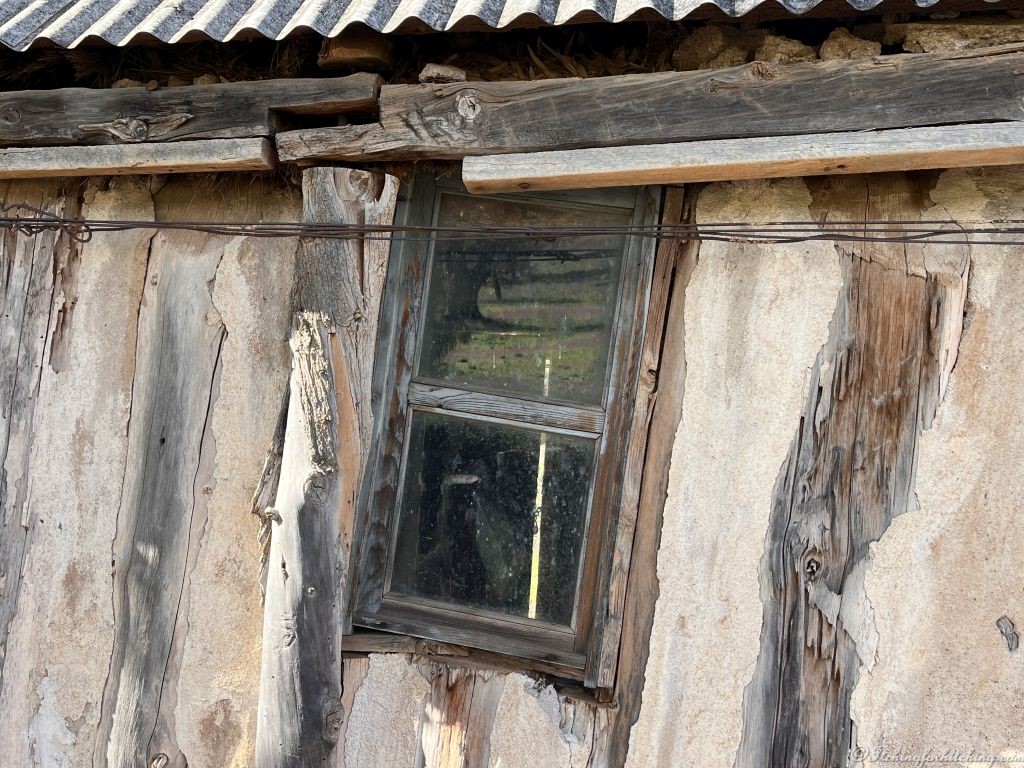
The property is well documented with storyboards, and it is fascinating to read of how a Pug & Pine* (or what we often call wattle & daub) cottage was constructed back then. Although the station would have had many hands to keep it running, no doubt it would still have been a lonely life out here so far from towns. A board recalling the importance of the not so regular mail deliveries, reminds me of the fact that Woody’s ancestors operated mail coaches south of here, between the copper mine towns and Adelaide, from about the 1840’s onwards.
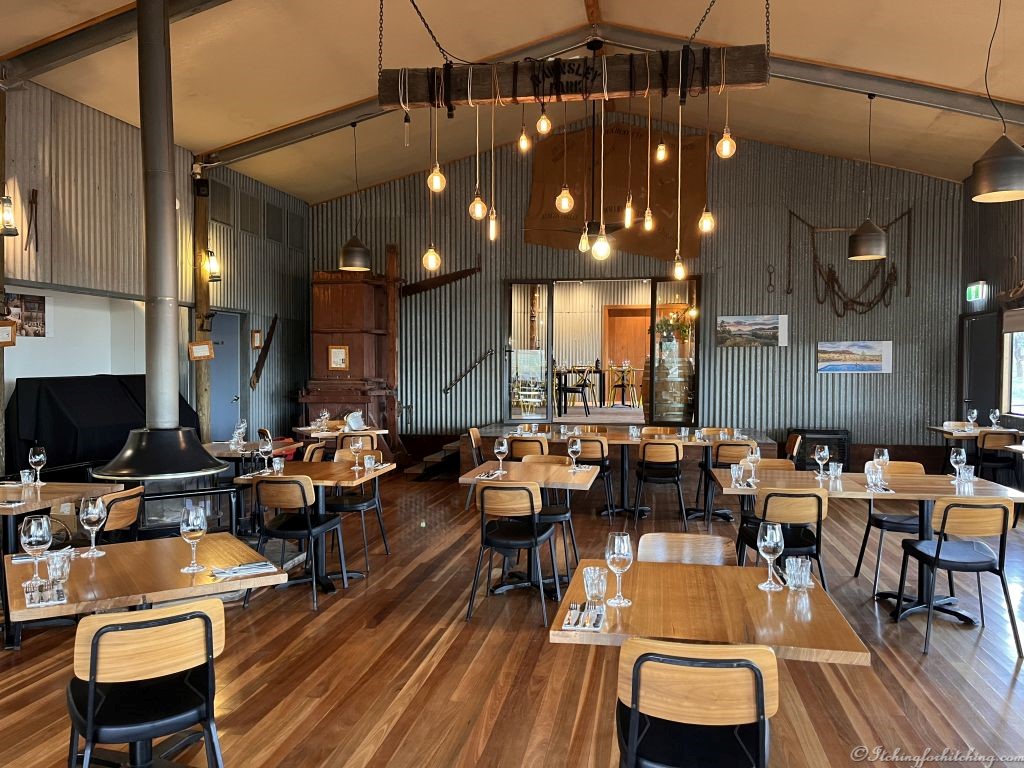
Back at Rawnsley Park, we leave VeeWee to continue with her analysis of all things Australian Rules Football and with Elle we drive out to the Woolshed Restaurant for dinner. The corrugated iron woolshed looks a treat, and folks are enjoying drinks on the deck as the last rays of the sun light Rawnsley Bluff. The dining room is bedecked with farming paraphernalia and our table is dwarfed by a big old wool press. The goat stew is succulent, and Elle (our steak officionado) looks contented with her steak. Aaah.
Accom: $46.00, Fuel: $60.00
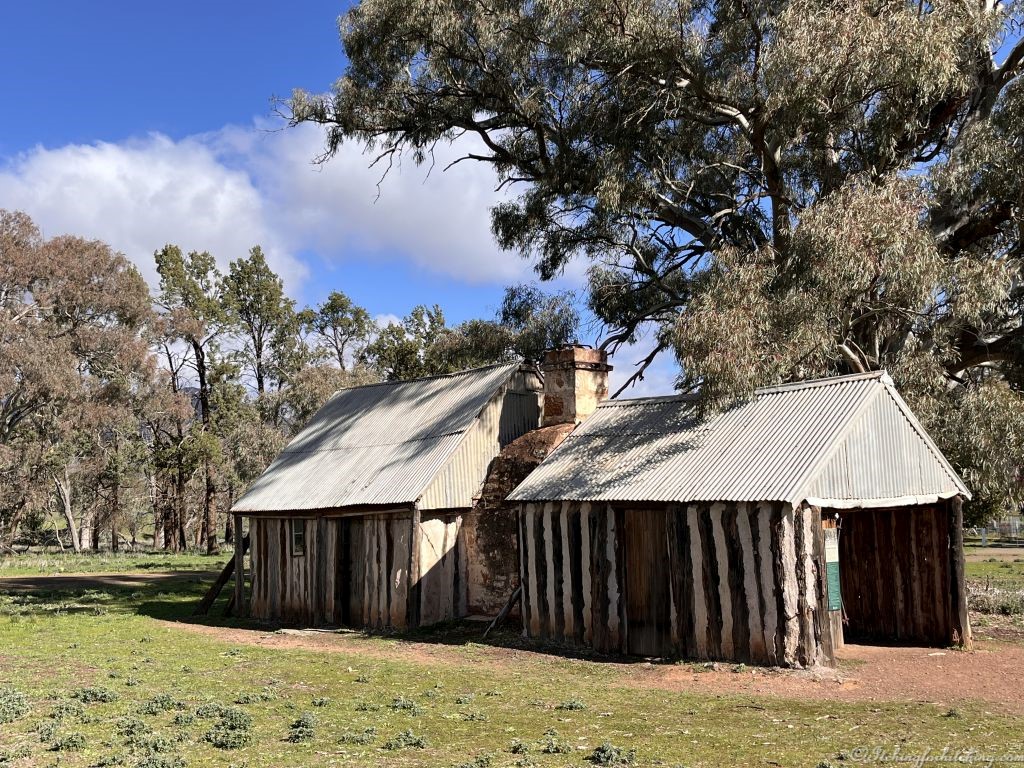
*This piece is from a storyboard beside one of the Wilpena Homestead pug n pine cottages
How to Build a ‘Pug n Pine’ Hut (with fireplace)
- Sharpen your axe and saw and get the smithy to make a box of nails.
- Find a good stand of straight native pines without twisted bark and fell some posts; leave the bark on so the pug will stick.
- Peg out the area – make sure the bedroom is wide enough for several, greenhide stretchers.
- Make a solid timber frame of pine and gum, a frame for the door and sashes for two windows.
- Build the walls with the pine posts, leaving a gap in one for a fireplace, (big enough to take tree trunks and stumps).
- Build a lime kiln in the bank of a dry creek; cut a good supply of red gum and burn limestone rocks for a couple of days. Let the kiln cool. Open and remove the rocks – they’ll collapse as powdered lime.
- Find some large flat rocks for a chimney – shales and slates are good.
- Build a chimney into the open wall using a lime and earth mortar.
- Pug the gaps between the pine posts with a mortar of gravel, mud and lime.
- Cut native reeds or grasses for thatch and lace to the roofing timbers…put in a calico ceiling.
- Bring up some large flat stones to make a floor or ask the cook for the greasy water from the meat boilings and empty on to the dirt floor to harden it.
- Whitewash the walls inside and out with lime, or leave a rough bark finish outside.
- Leave a few large nails protruding on the inside for hanging hats and trousers, pannikins, rags, and waterbags.
- Fit a door – don’t worry about a lock as your hat’ll be on your head and your tobacco pouch’ll be in your pocket.

 itchingforhitching
Fascinating stuff! And beautiful. Love the Flinders.
LikeLiked by 1 person
It makes you want to go out and build a hut doesn’t it?
LikeLiked by 2 people
Thanks for the hut-building instructions. Perhaps I should put them aside for later …
LikeLike
After the apocalypse?
LikeLiked by 1 person
Didn’t look too Spartan. A substitute for your travelling home if necessary?
LikeLike
😂
LikeLike
Beautifully described in prose and photography
LikeLiked by 1 person
Thanks Derrick.
LikeLiked by 1 person
I reckon we should have a hut building competition!
LikeLiked by 1 person
I’m in! Just ducking down to the hardware store 😂
LikeLiked by 1 person