

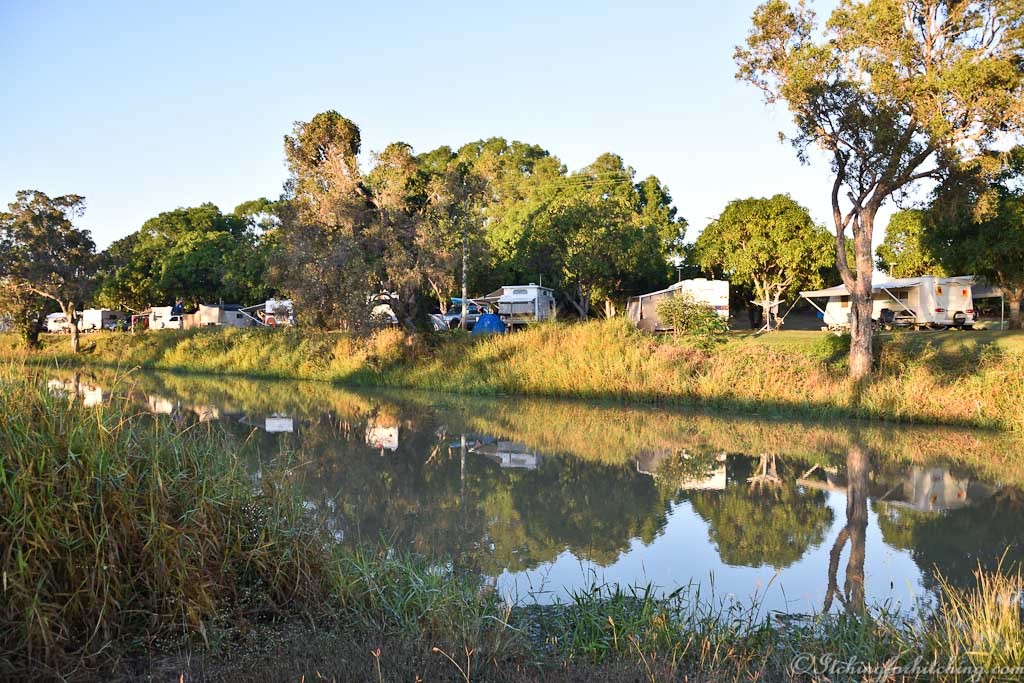
Burdekin Cane Farm, near Ayr, Qld
We visited this amazing place in July 2018
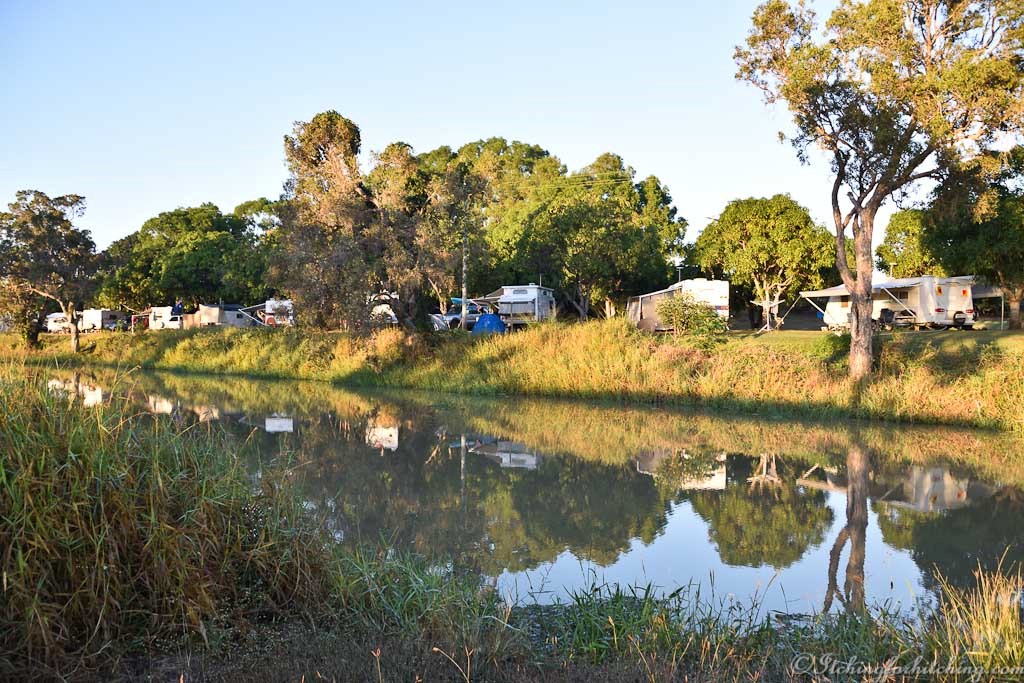
The farm is on Waterview Road, so named as it skirts a long lagoon. Greg’s farm stay is on mowed lawns under shady mango trees and overlooking the lagoon. Behind us and up the hill is Greg’s farm and hundreds of acres of sugar cane. Across the lagoon is a vista of sugar cane. Our hosts are Greg the farmer and the resident camp managers. There are no amenities so campers must be self-contained, but there is power and water and 25 picturesque sites. There is a dump point, bins for our cans and bottles and happy chooks to feed our scraps to. Once we are set up our site is ours until we feel like moving on. This is Grey Nomad heaven.
It’s fascinating just watching the cane trucks with their loads of cane scurrying back and forth to drop their loads onto the rail tracks to await the cane train and the journey to the mill. There are magpies, lorikeets, sacred kingfishers, ducks on the lagoon, yellow butterflies flitting through the grass, mangoes and paw paw trees and of course the farm chooks and geese pecking about. As well as two dogs one with a snoring problem who is happy to snore the day away under anyone’s van.
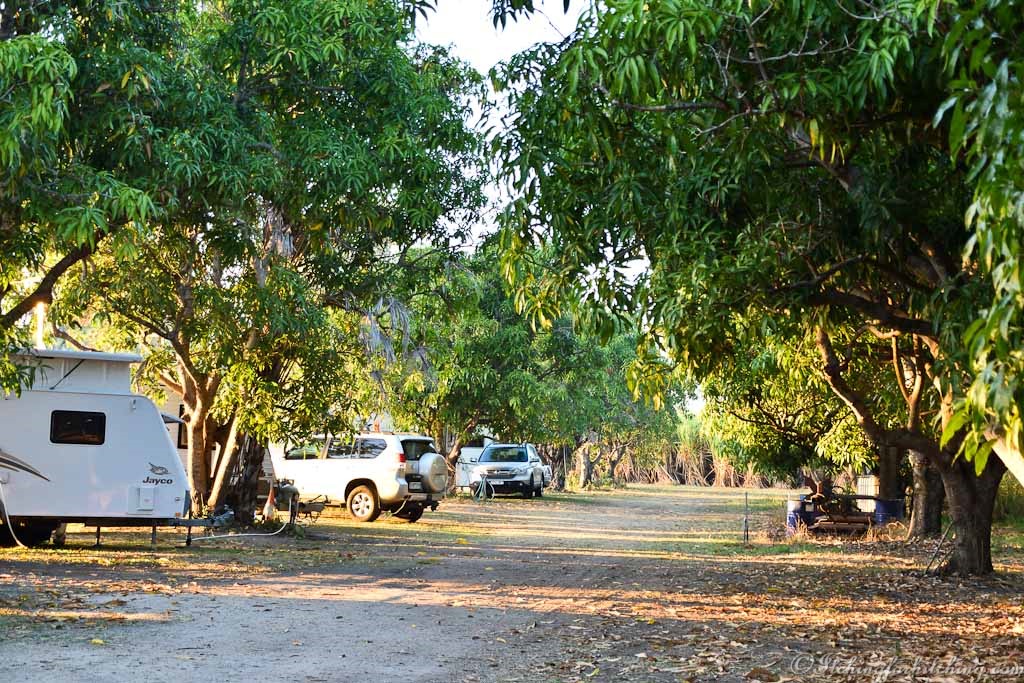
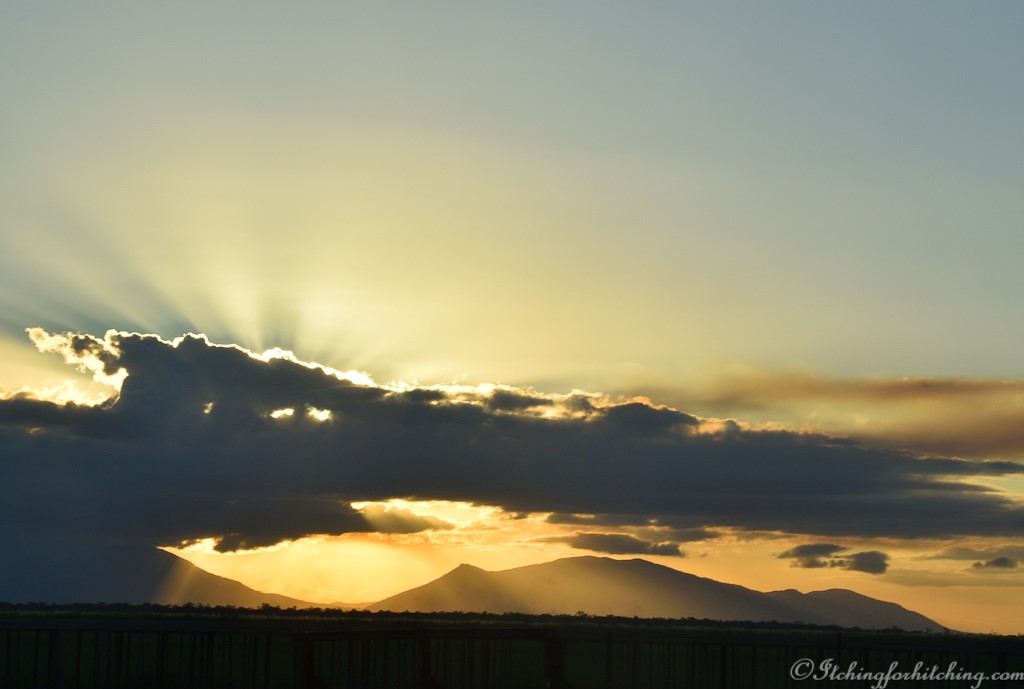
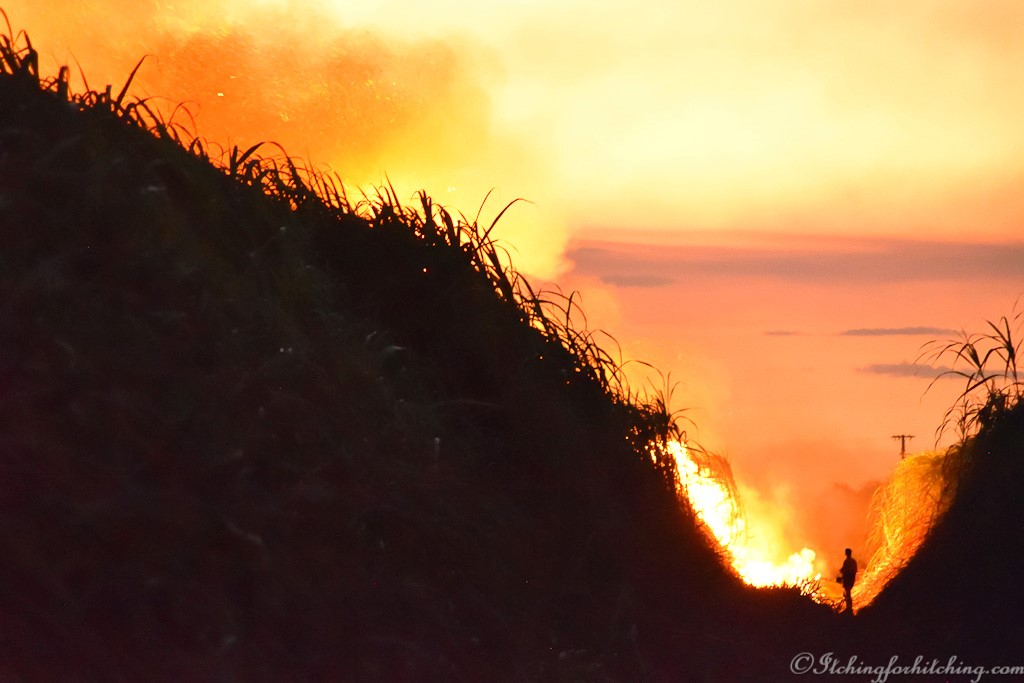
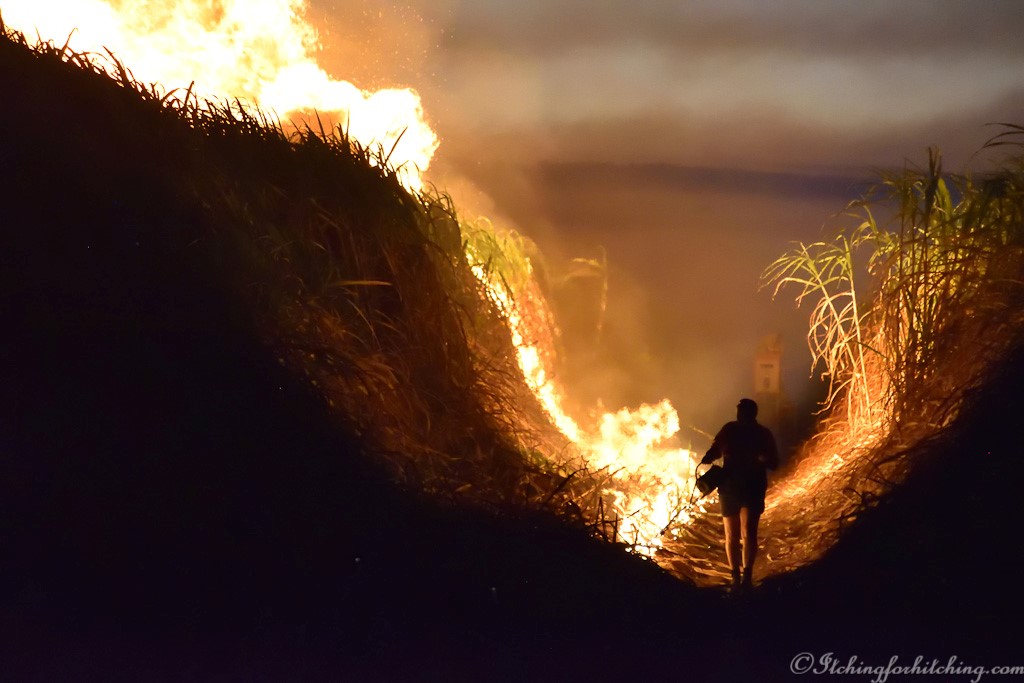
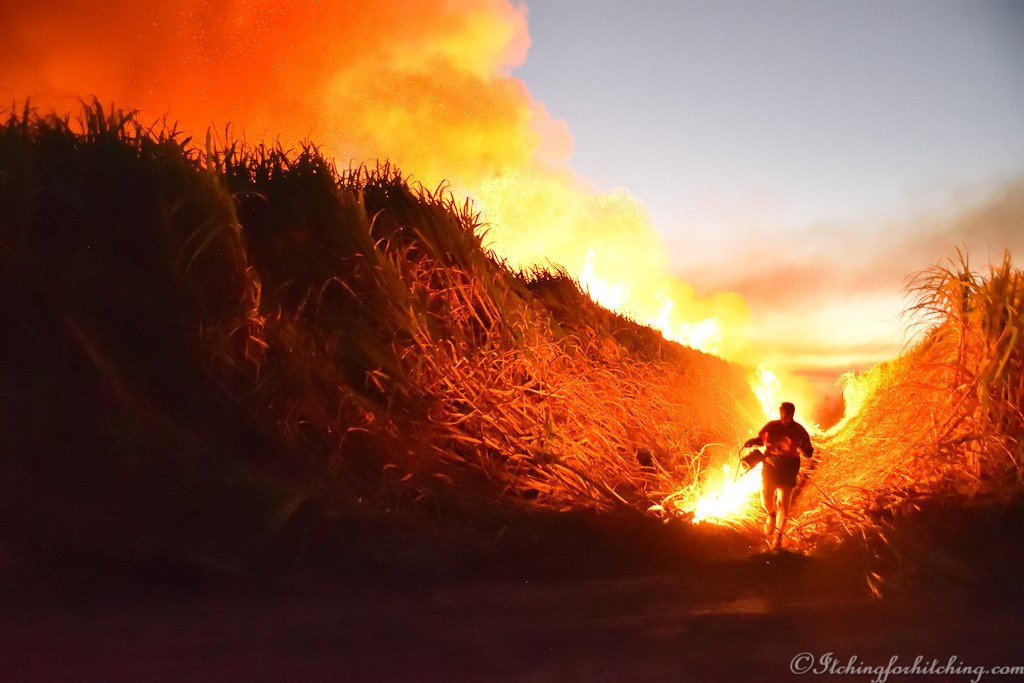
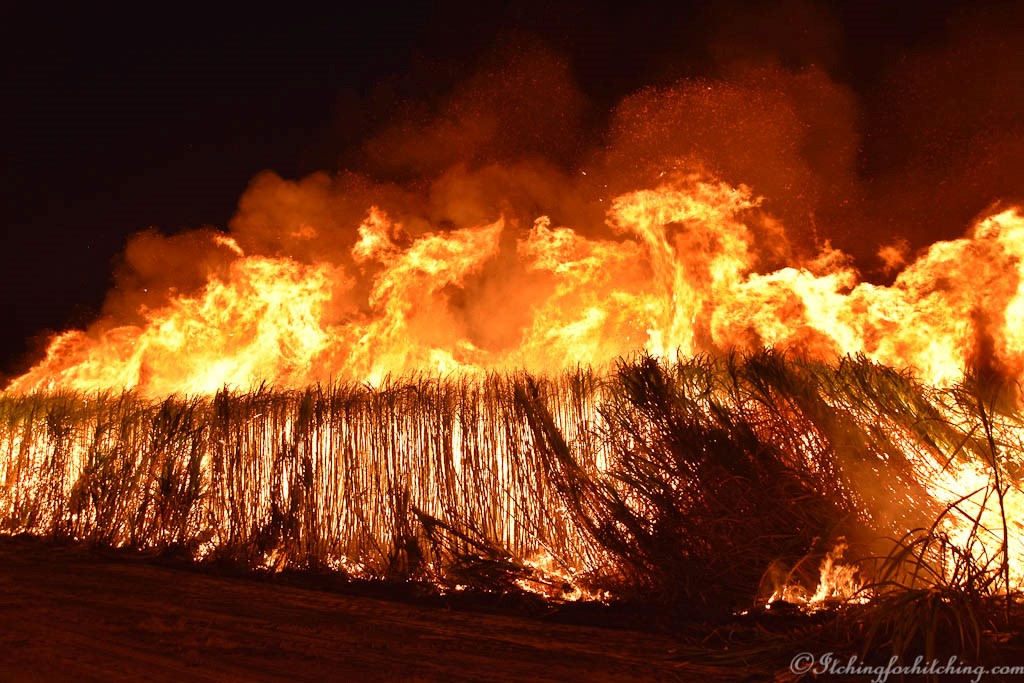
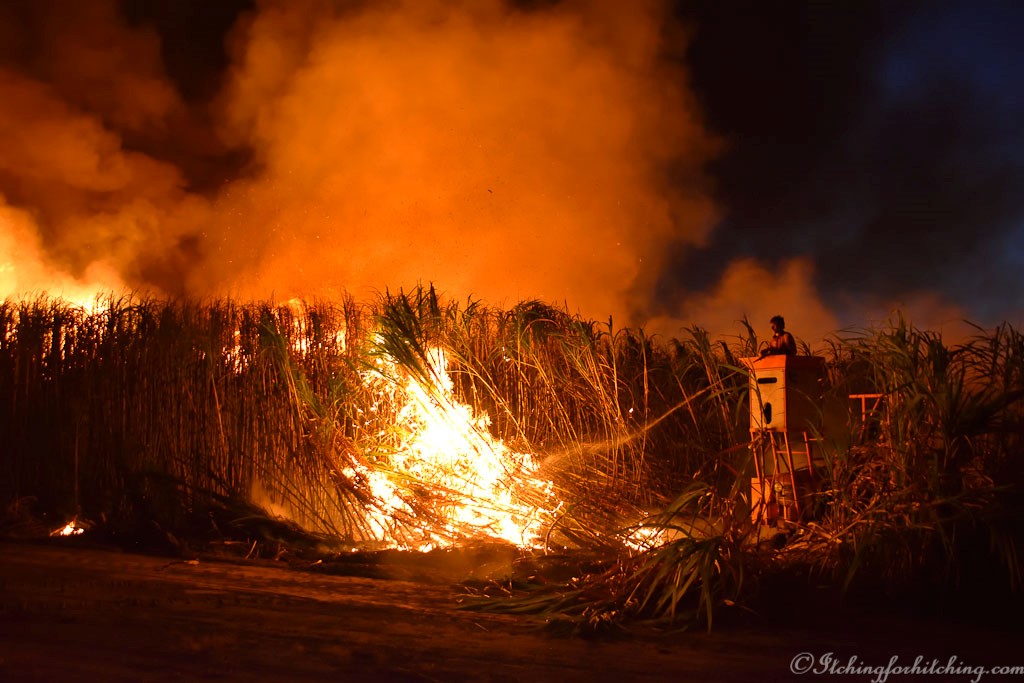
At 4:00pm the fire pit is alight and we wander over to meet our fellow campers. At 5:00pm Greg zooms up in his ATV and asks if anyone would like to “see a burn”. Of course we would. We change into long clothing and proper shoes and jump into three farm vehicles to head across to the neighbour’s farm. Lucky Woody gets to ride in the ATV with Greg. There is a stunning sunset over the Range as we pull up between an old choko farm and a section of cane that has already been flattened inwards to reduce the chance of the fire spreading to other sections. There are golden glows of fires being lit all around the horizon and Greg explains that they burn at dusk as it is the best time to be able watch what the fire is doing. The Burdekin region is unique in that they irrigate their cane using the water from an underground aquifer and they are the only region up here that still burns their cane. They have the best yield producing 1 tonne of sugar from every 7 tonnes of cane. Greg is a wealth of information being a 4th generation cane farmer. He explains how machinery has been developed and modified over the years to suit their methods and how the growers of the valley manage the water levels in the aquifer.

Then someone shouts and, in the distance, we can see the glow of a fire about a kilometre away. As we watch we can see a farmer lighting the cane, a black silhouette against the flames slowly walking our way. It is tradition that the owner of the cane does the lighting. On one side of us we can hear the evening cacophony of crickets and frogs in the tall, green growing cane, on the other side the fire crackles towards us. Then it’s bursting and exploding with tremendous heat right in front of us followed by an extinguisher truck. Within minutes it’s all over just the dried cane trash (dead leaves) has been burnt and we are left speechless. We climb in the vehicles and go back to the farm where Greg joins us at the fire pit while our chops sizzle.
The story goes that Greg and his wife went caravanning a few years ago and while doing the ‘Grey Nomad’ thing he realised that his region had something unique that really should be shared with others. How right he is.
Footnote: In thirteen years of caravanning this has to be the best experience that we’ve had. To say that we were speechless is true. I found that I just couldn’t process the powerful sight that we had witnessed. Greg is a charming host, and the farm is only a few minute’s drive from the town of Ayr. It is a beautiful spot to just kick back and relax with a book by the lagoon or to tour the area.
Burdekin Cane Farm, Waterview Rd, Ayr, Qld. You’ll find it in Wikicamps but ring first, they are closed to campers in the off season. The cane is burnt from June through November and when the weather conditions are right. The aim is to burn off the unwanted leaves and ‘cane trash’ prior to harvesting. It is a highly skilled and professional operation and Greg delights in explaining the process to children.
 itchingforhitching
A stunning experience so well photographed
LikeLiked by 1 person
It certainly was stunning.
LikeLiked by 1 person
It must be an exhilarating, yet frightening experience to witness the burn.
LikeLiked by 1 person
So controlled, yet so awesome.
LikeLiked by 1 person
Wow, so very powerful. How wonderful you got to see it first hand.
LikeLiked by 1 person
Greg loves to share the sugar burning experience and he is so knowledgeable.
LikeLike
Those are stunning photos, what an amazing experience definitely one you will never forget
LikeLiked by 1 person
Just brilliant.
LikeLiked by 1 person
What a spectacular sight, well done capturing it in photos too! Absolutely stunning.
LikeLiked by 1 person
Put it on your list, it’s a must do.
LikeLiked by 1 person