

I recently read an article by someone complaining about the boredom of retirement and no longer having the chance to learn new things. If you are a regular reader of this blog, you’ll know that this really got my goat up!
One of the big surprises of retirement and spending time on the road has been the things that we’ve learned. Not just about caravans and towing. We had to learn that very quickly, and we are still learning eleven years or so after buying our first van. But other stuff too.
Stuff like, navigation and geography, weather and climate, geology, biology, history, agriculture, arts, and culture to name a few.
Whenever we see mine tours advertised I’m off like a hungry ferret. You see, my paternal ancestors were generational coal miners from the Rhondda Valley in Wales. Great grandfather, 2 siblings, a spouse, and a cousin, came out to Australia in the 1850’s gold rush and soon discovered that there was more money to be made in wheat than mining. The other side of my family? Well, they were from 4 generations of publicans in Kent, so no doubt that explains a few things as well. Now getting back to the minerals.
A mine of wealth – Broken Hill
Back in 1883 silver, lead, and zinc were found in Broken Hill, NSW. Thus became a mine that is still in operation. It’s hard to imagine how much has been extracted from the earth in that time.
It’s 2013 and from Wentworth, we head up the Silver City Highway, over each undulation which is about 5 kms apart, there is not much in between but scrub and saltbush and herds of happily munching goats. We’re excited because this is our first caravan foray into the outback. Finally, odd-shaped hills appear in the distance, the Barrier Range, and then rusting machinery, and suddenly, Broken Hill slap bang in the middle of the desert, mullock heaps, and a city. Lots of mullock heaps. The road signs tell us we are now on Central Standard Time (Adelaide Time) and our phones suddenly drop back a half hour. Yes, Broken Hill although in New South Wales is closer to Adelaide than Sydney so it runs on CST.
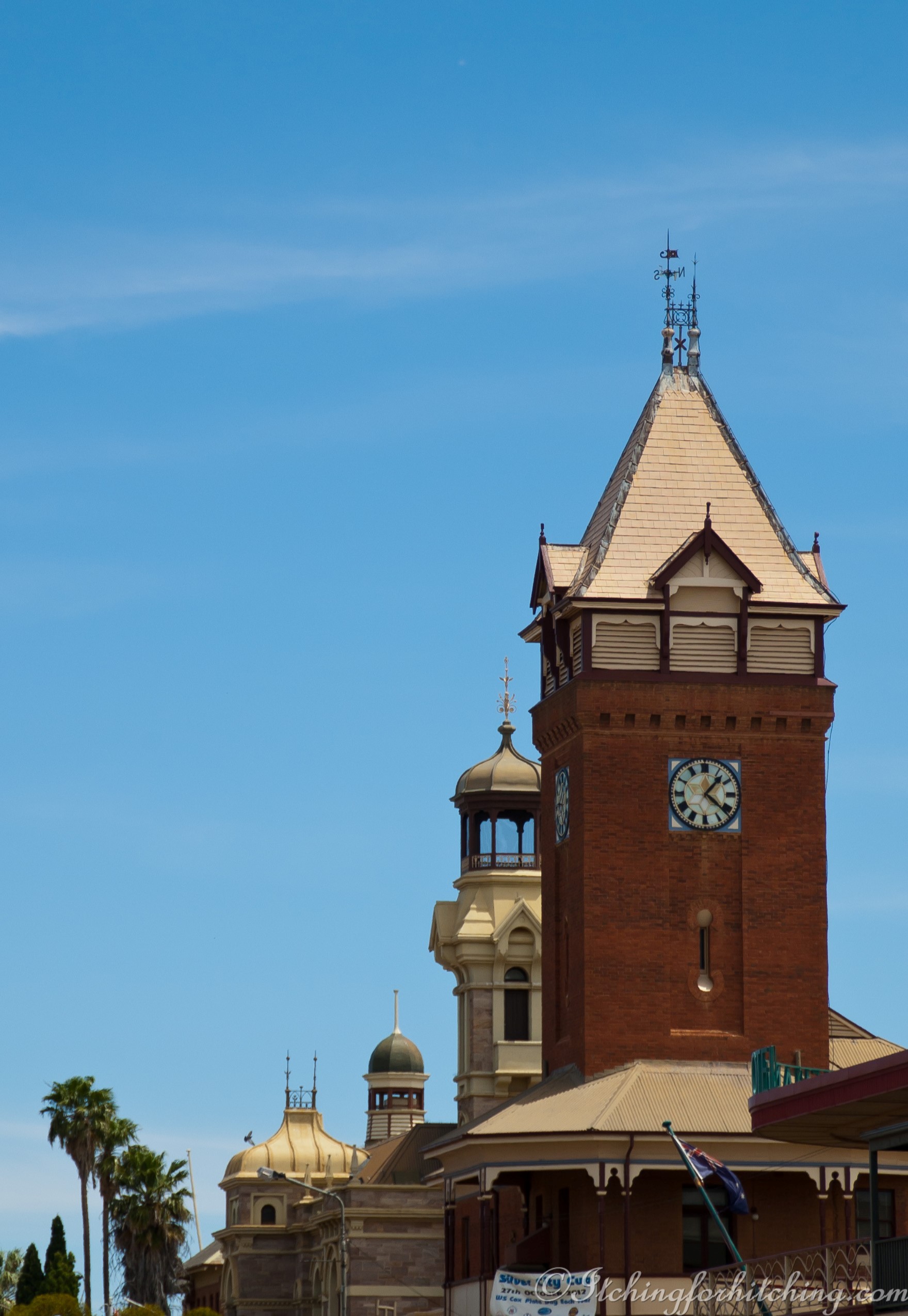
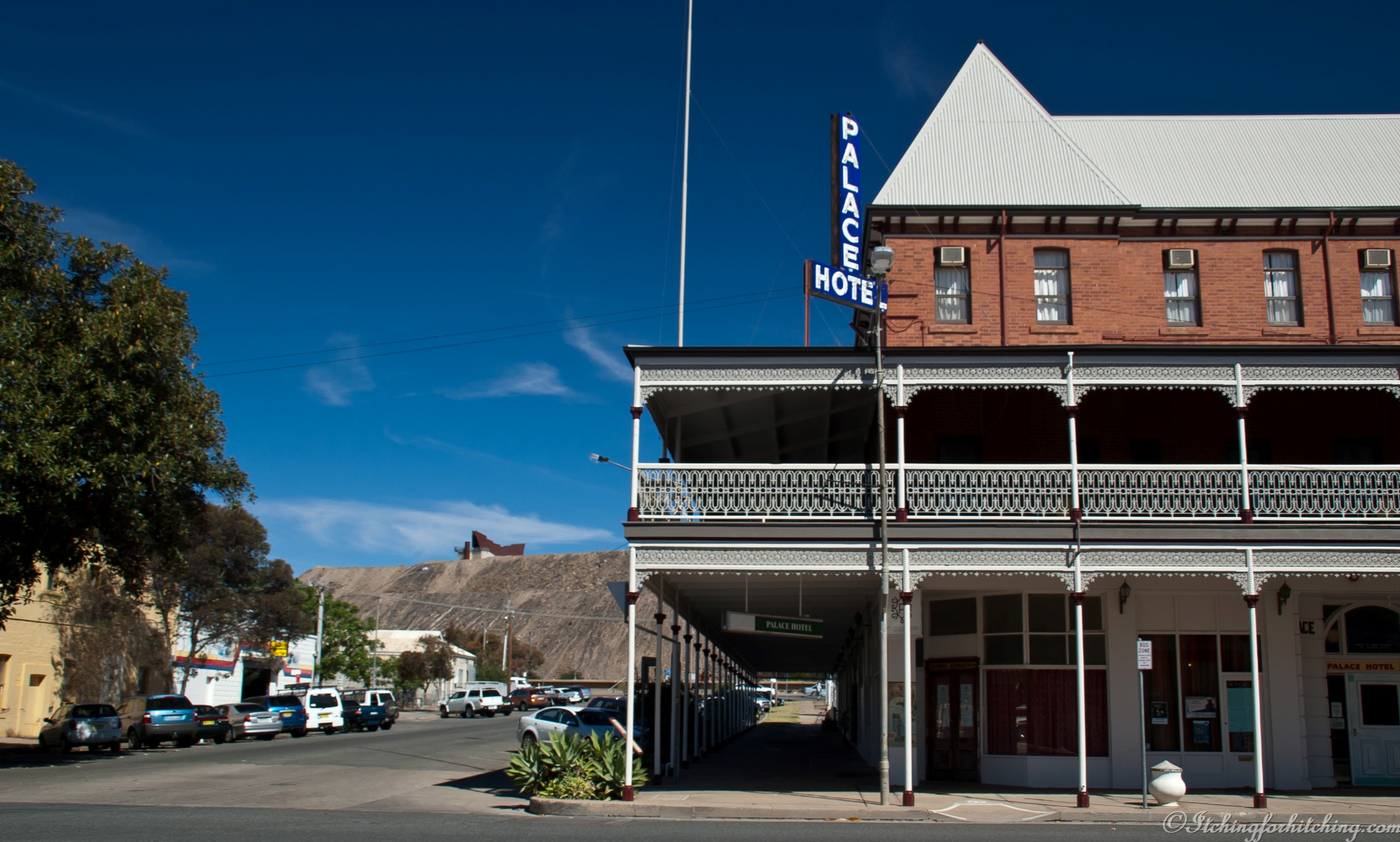
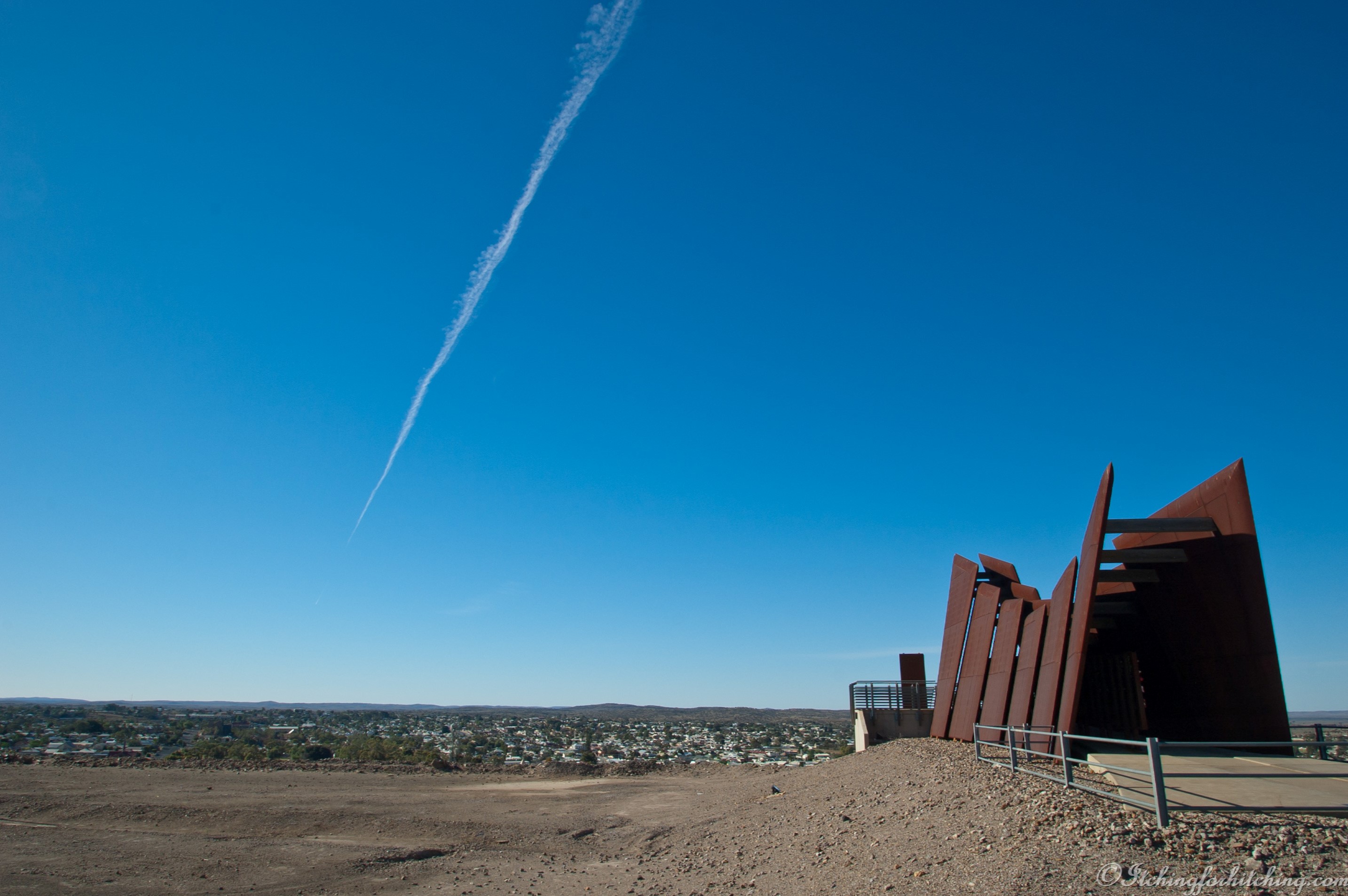
We soon learn that the enormous hill that towers above the city is the Line of Lode, 7.5kms long, 1.6kms deep, a 300 million tonne body of ore and still being mined to this day. Perched on the very top is a monument to the miners who have lost their lives on the job, eight hundred of them, thankfully the numbers have lessened over recent times. Beside the Miners Memorial is the Broken Earth Restaurant, with a fabulous view of the city below. We walk along the main street which is called Argent Street (the streets have metallurgical names) and have a cold beer at the Mid City Bar. The city buildings are beautiful, many have been huge old pubs, but sadly no longer. The quality of the administrative buildings attests to the wealth that has been created here.
Silver @ Silverton
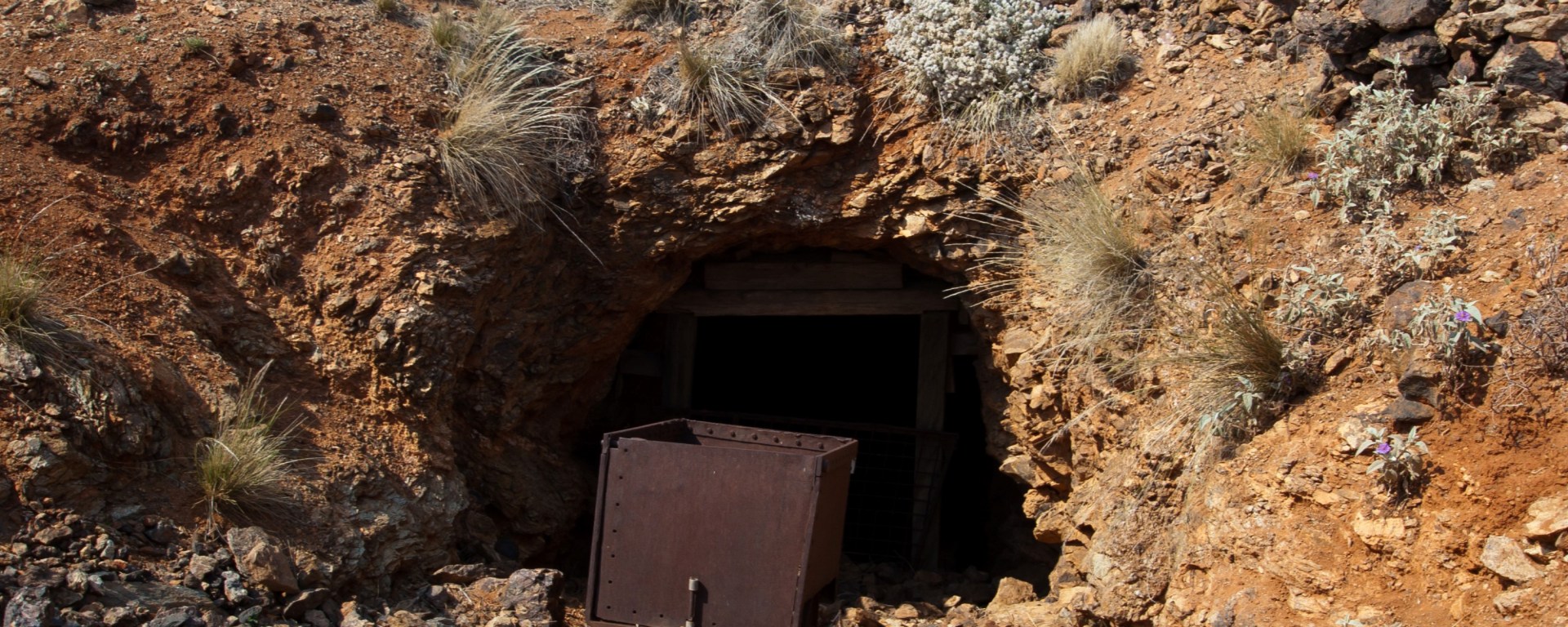
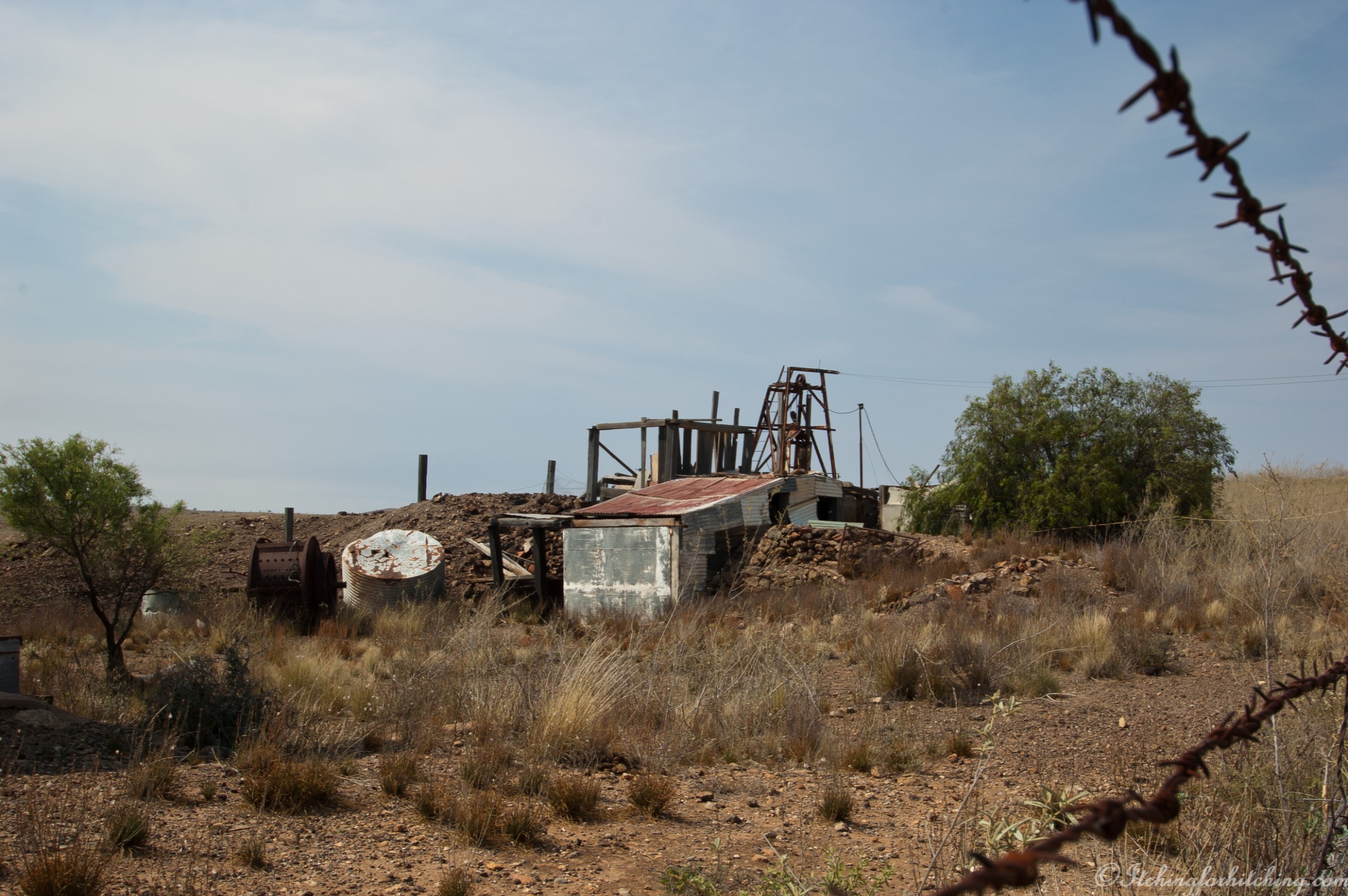
It’s a beautiful clear morning as we head out to Silverton a little west of Broken Hill. We turn off the made road and take the 6kms of unmade road out to the Daydream Mine, the drive alone is worthwhile as it really does have an outback feel, what with the red dusty road, the saltbush, yes more saltbush, and rocky outcrops, one could wander around here for hours. We arrive at a ramshackle disarray of diggings and rusting equipment. There is an old, corrugated iron house, with pressed metal ceilings which serves as the office, cum souvenir shop, cum tea rooms, which really needs a serious marketing makeover. The flywire door makes that delightful twang sound as we enter. (That sound that only a farmhouse flywire door can make which for those of us who grew up in the country is the soundtrack to summer).
Seventy dollars lighter, a group of us follow our guide Kev (the boss) around the various aspects of the mine site as he describes the vegetation, powder store, and the short lives of miners. The miners used to sleep sitting up because their lungs were too damaged (by lead and dust) to allow them to sleep horizontally. The mine was originally worked by Cornish miners who had traipsed all the way up from South Australia when the copper ran out at Burra. The mine was begun in 1882 and closed in 1983. We don helmets, hook on our lights and battery packs, and scramble down into the mine in a crab-like fashion.
We all thank those helmets constantly as there is only four feet of headroom in some places, those miners must have been small. It was a great tour, we saw outcrops of silver and Kev explained a lot of the whys and wherefores of mining both past and present, heavily interspersed with his views on world politics and economics. I guess he was something of an underground taxi driver! Back on the surface, we wolf into tea and hot scones inside the cool of the tea rooms. Over tea, we chat with a somewhat talkative couple from Morwell who are making their way to Bourke. I’m glad they’re not camped beside us, ‘cos they’d talk the leg off a chair.


Lead – Mt Isa
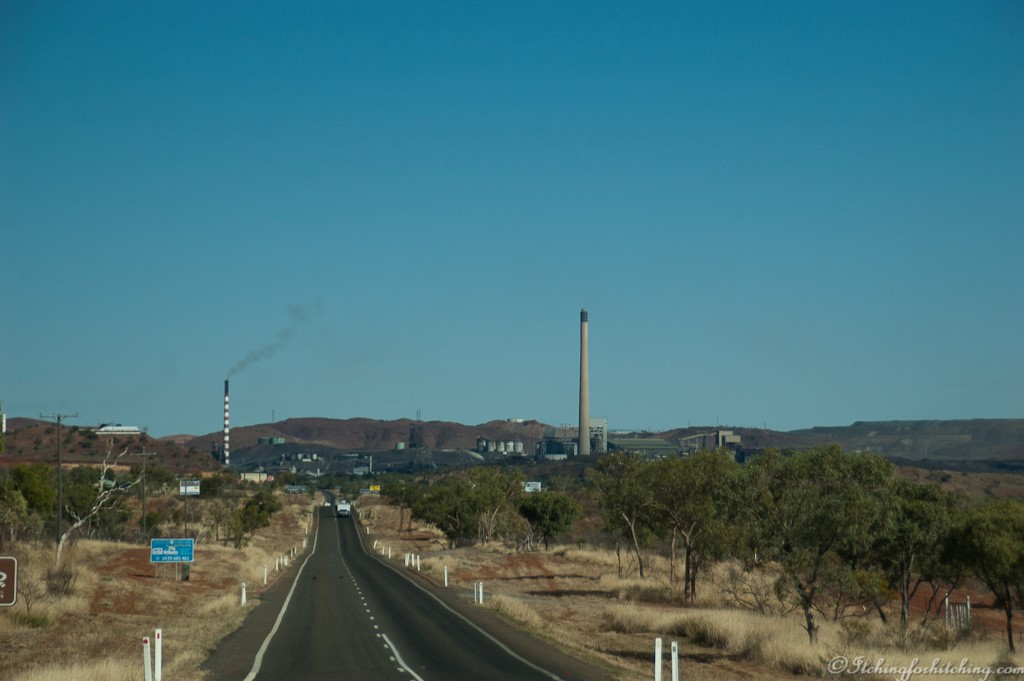
The Isa is not an old town, lead was discovered here in 1923, so there aren’t the 19th-century heritage buildings and traditional outback pubs that define other towns. Surprisingly the City of Mt Isa actually includes the ‘suburb’ of Camooweal, 188 kms away. As well as lead they mine silver, copper, and zinc.
It’s Winter 2014 and we spend a morning driving around the residential streets looking at the housing. Most houses are metal-clad with little or no garden. Those with a good garden are a veritable oasis. Water is short but artesian water is available. We hear regular warnings on the radio warning people to leave their shoes and pets outside and to wash their hands after gardening and handling pets, because of the danger of lead poisoning. I wouldn’t garden here either.
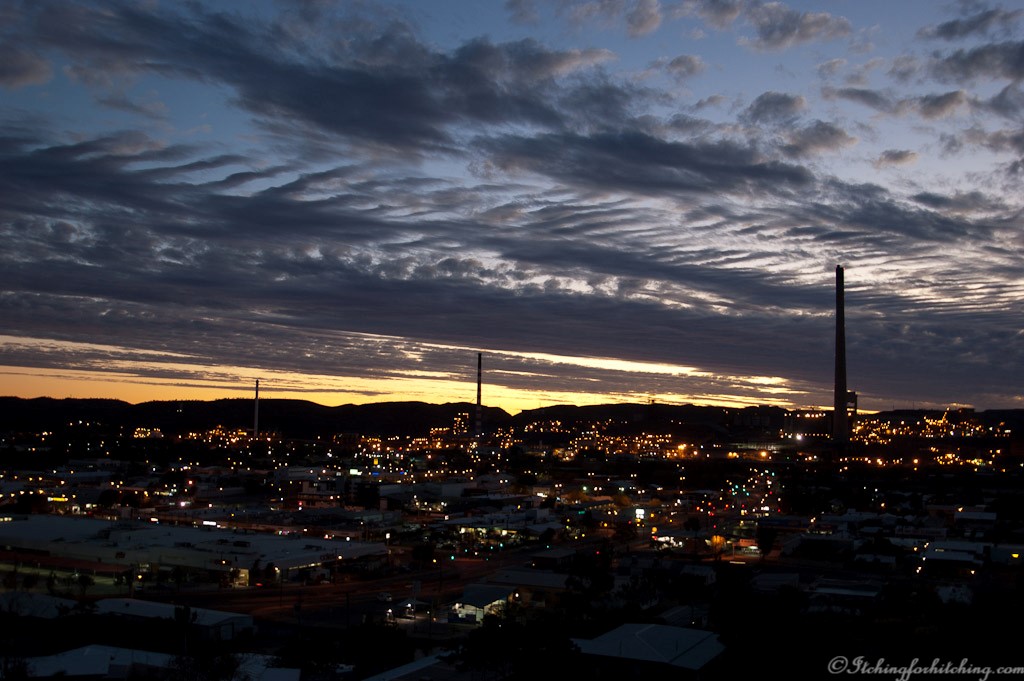
The view from the lookout shows a city ringed with rocky hills the lookout being on a hill in the centre of town. It is a unique city. The very dry riverbed is on the western side of town. The mine is located between the river and the hills, it is huge and stretches for several kilometres. It looks as though they are carving out a lot of the hill with several open cuts and mine shafts. This area is known as ‘mine side’ as opposed to ‘town side’ (of the river). The sun sinks behind the hills with a crimson blaze across the sky. The lights of the mine become obvious and its true size becomes apparent.
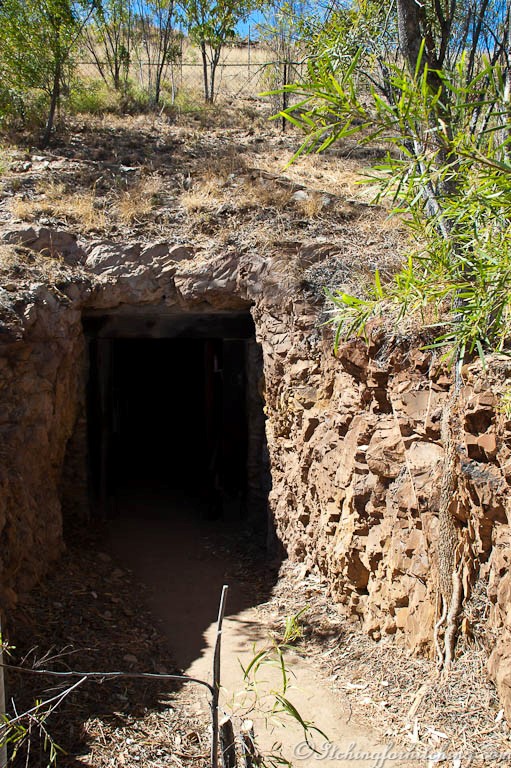
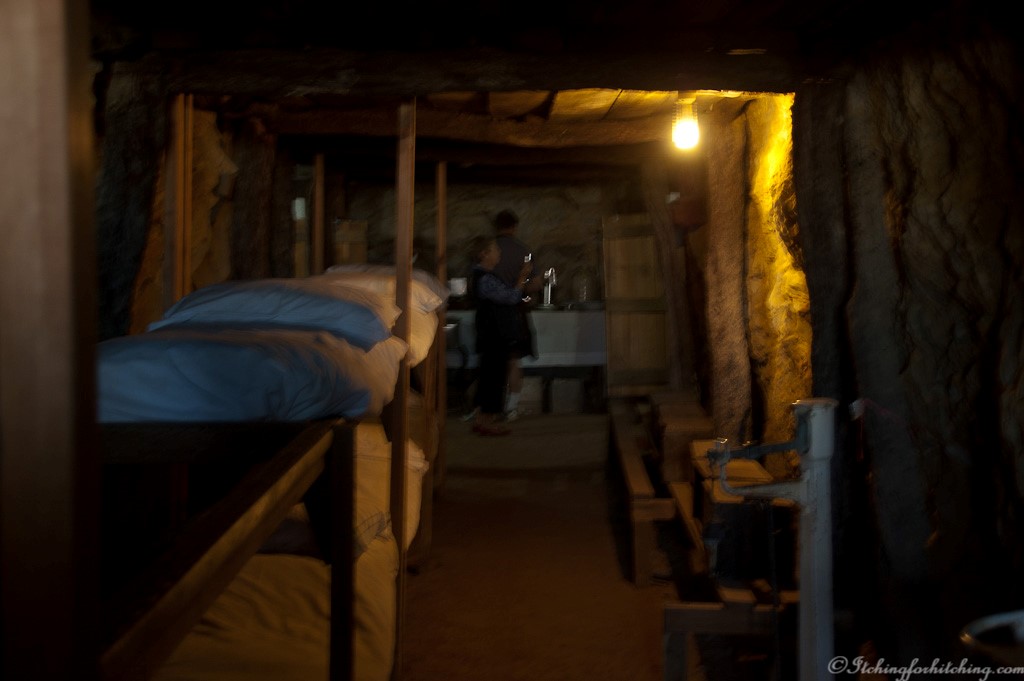
On a bright, clear, and chilly morning, we visit the underground hospital which the miners tunneled into the hillside during the 2nd World War. With bare rock walls and an earthen floor, it was used as an air raid shelter for the patients and staff in the event of an attack. Thankfully it was only ever used by tired staff in need of a quiet nap. Attached to the underground hospital is a hospital museum full of frightening medical equipment.
But there’s more than silver, lead, and zinc…
 itchingforhitching
Love the Broken Hill and Silverton areas and can’t wait to go back and spend more time there one day. We haven’t been to Mt Isa yet but it’s on the list too!
LikeLiked by 1 person
Broken Hill is like no other and yes we keep saying that we must go back.
LikeLike
Yu seem to have had an instructive and interesting time. Many years ago, my then husband had the opportunity to tour a working coal mine. He was allowed to take a guest. But not me. Oh dear no. No women allowed. My resentment hasn’t diminished over the years!
LikeLike
Oh, I’d be seething too. Women are an integral part of the modern mining industry here. In Mt Tom Price in WA, women drive those super big trucks as they tend to drive more economically.
LikeLiked by 1 person
Good to know. We have a very few female truckers here – but bus driving seems to have embraced the female driver.
LikeLike
Here too, we have a lot of female bus drivers.
LikeLiked by 1 person
Nicely written. I passed through Silverton too quickly in my road trip to try and visit the mine, but this kind of place never leaves anyone unimpressed.
LikeLike
Thanks Lookoom. It’s certainly a ‘colourful’ area.
LikeLiked by 1 person
I was fascinated by Broken Hill, and amazed at the history and surroundings. This post brought back memories for me of our visit.
LikeLike
Such a mix of mining and art, with the desert as a backdrop. I’d like to go back and soak up some more of the place.
LikeLiked by 1 person
We stayed for a week and wished we’d stayed longer.
LikeLiked by 1 person