


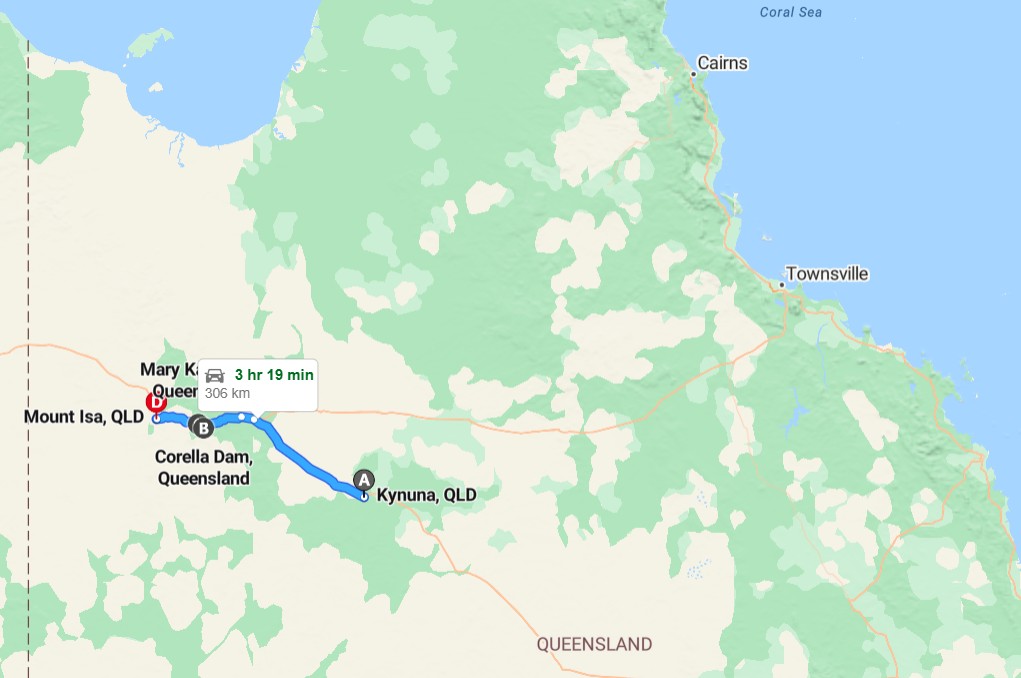
Kynuna
I have to mention Kynuna because, though it’s a mere dot on the map it does have the iconic Blue Heeler Hotel which dates back to the 1860’s when it was a Cobb & Co staging post. During the Great Shearer’s Strike of 1894, the shearer’s celebrated in the Blue Heeler after burning down the woolshed at Dagworth Station. Trivia alert: the owner of Dagworth was to die in this pub at a later date. The Shearer’s Strike prompted the birth of the incumbent Australian Labor Party.
A little way south of Kynuna is the walk out to the Combo Waterhole, the Waltzing Matilda billabong, yep that billabong, which along with the Shearer’s Strike, inspired Banjo Paterson to pen Australia’s unofficial national anthem. The one that makes homesick Aussies cry over their beers when in foreign countries.
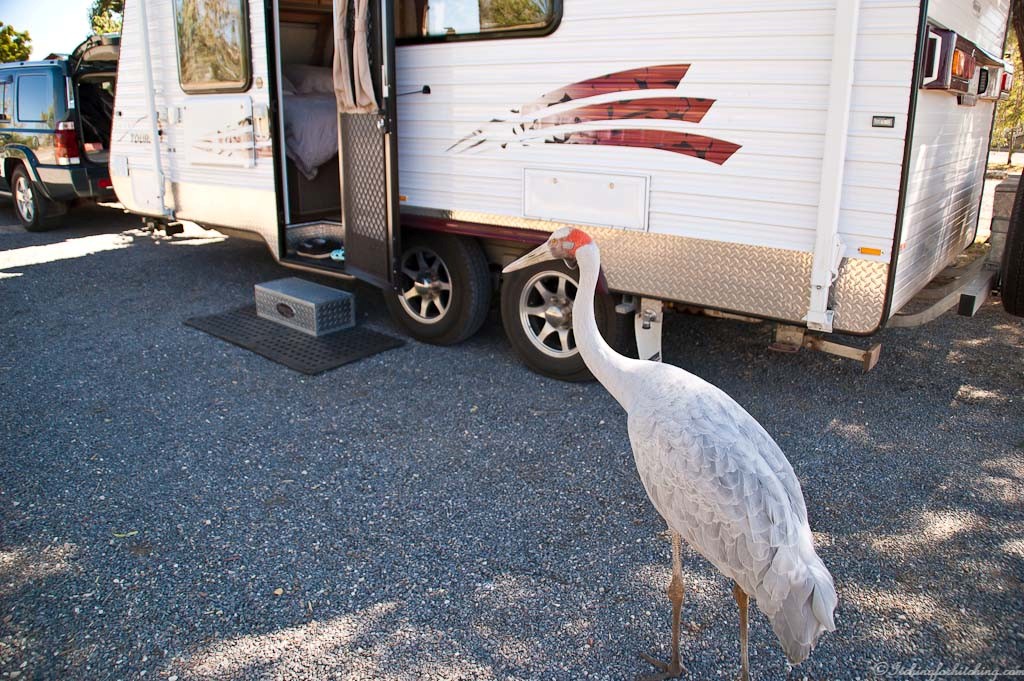
We stayed at the Kynuna Roadhouse which was run at that time by a couple of ladies who were blessed with a dry humour. We were asked to close the bathroom doors to keep the brolgas out, as people complain when they get brolga poop between their toes. It was a warm evening, and we decided to BBQ some sausages for dinner but when I returned with hot chips from the girls in the roadhouse I found a somewhat shaken Woody bailed up by two large brolgas that were trying to pinch the snags.


Corella Dam
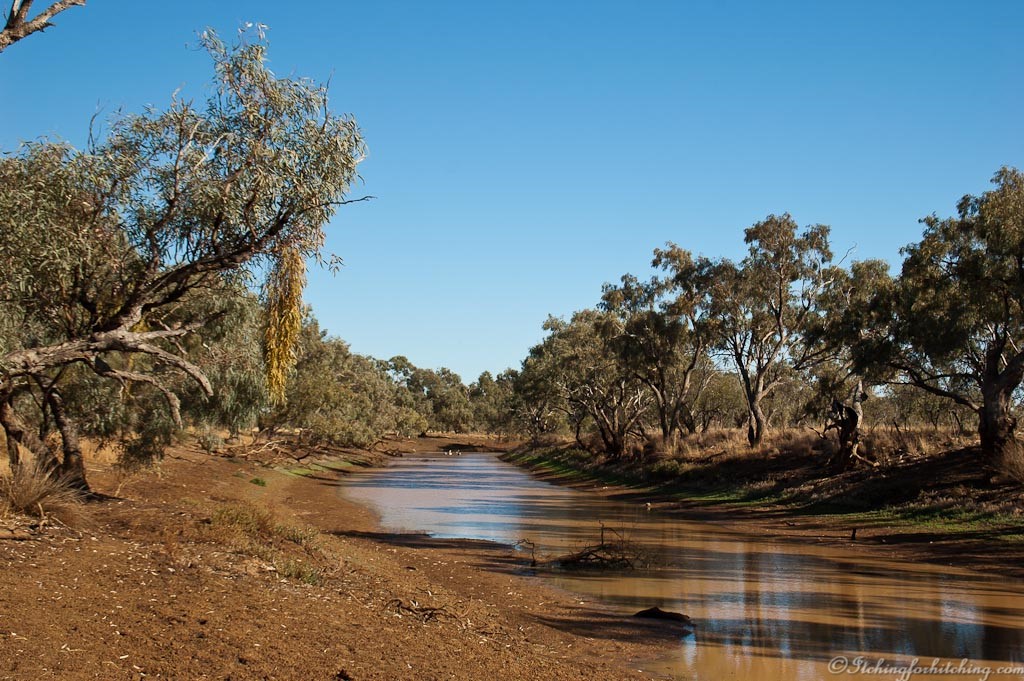
On the Barkly Highway west of Cloncurry, you’ll find a couple of excellent freedom Camps. The Clem Walton Park Rd takes you into Corella Dam a popular spot well off the highway for fishing and swimming. Don’t worry about the crocs, they’re only freshies. Birdlife abounds here and the surrounding hills light up at sunrise and sunset.

Mary Kathleen
When the Mary Kathleen uranium mine closed in 1982 the purpose-built houses were auctioned off and all evidence of this model mining town was removed except for the sealed roads and concrete carport slabs. This makes for perfectly level caravan sites in a delightfully peaceful gum-treed setting. It is fascinating to poke around here and get a feel for mining towns before the ‘fly in fly out’ era. When we visited, we met a chap who used to stay with friends here as a child and still loves the area. He was a wealth of information about the place. For the adventurous the old mine is about 5 or so kms into the hills and there has been talk of rare earth minerals here, but maybe that’s just pub talk.

Mt Isa
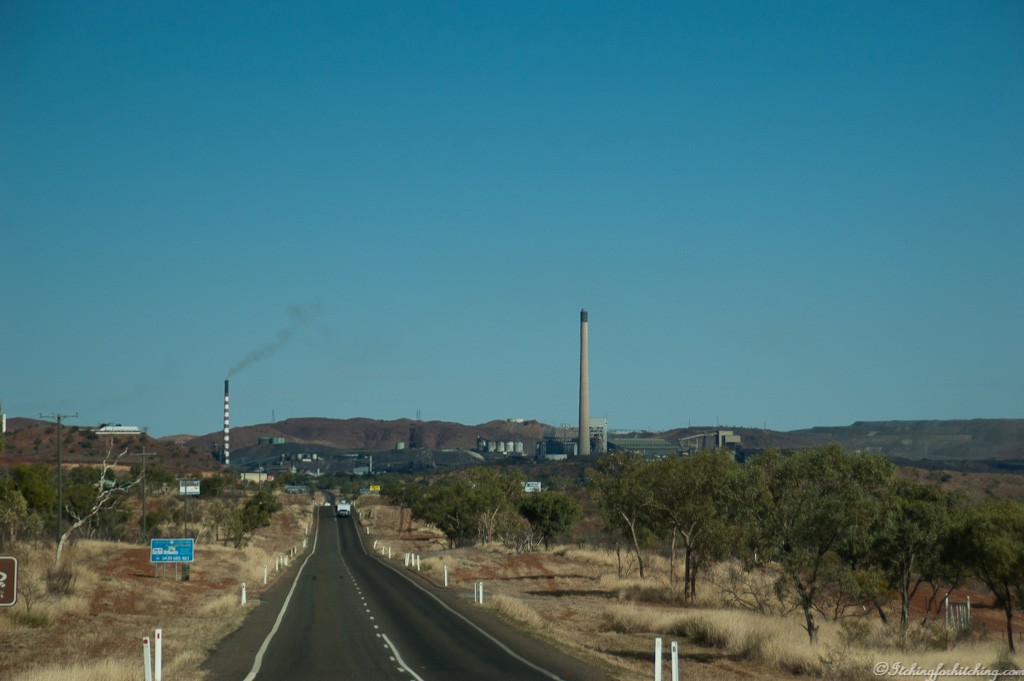
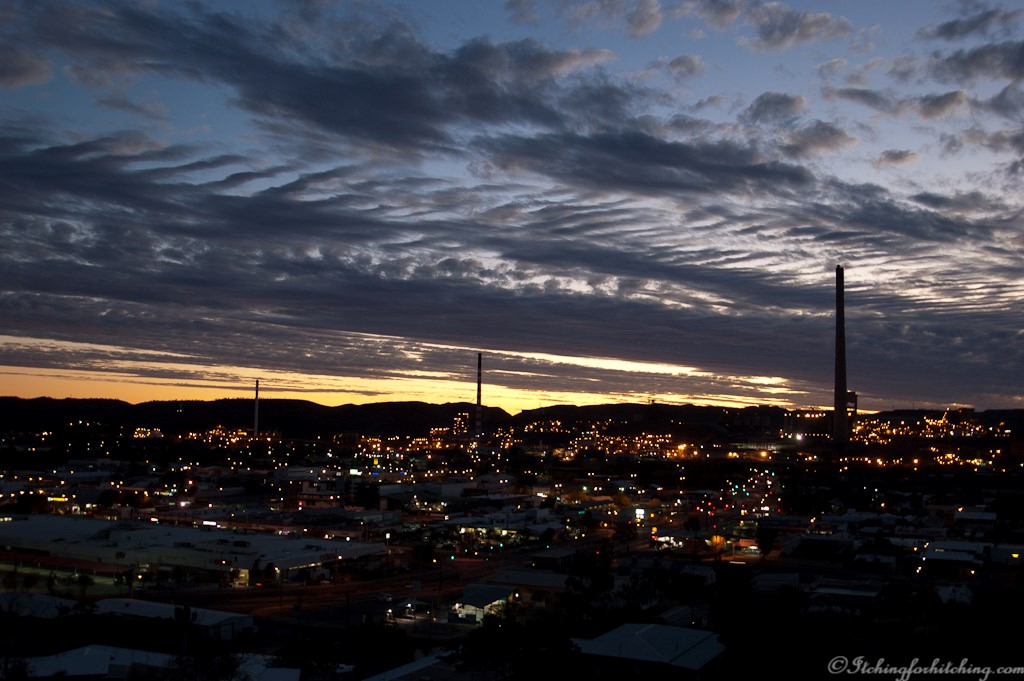
As far as towns go, The Isa is a bit of a newcomer. Lead was discovered here in 1923, so there aren’t the heritage buildings and traditional outback pubs that define other country towns. Surprisingly the City of Mt Isa includes the ‘suburb’ of Camooweal, 188 kilometres away. The road connecting the two towns is locally known as the “longest main street in the world.” The mine provides a dramatic backdrop to the city and the view of the city lights from the lookout is a treat at sunset.
During World War Two the miners tunnelled into the hillside behind the hospital to build an underground hospital. With bare rock walls and an earthen floor, it was used as an air raid shelter for the patients and staff in the event of an attack. Luckily it was never used for that purpose, but it would have provided a quiet retreat for busy staff in any case. Attached to the underground hospital is a hospital museum full of frightening equipment and next door is Mt Isa’s last Tent House. Tent houses were built from canvas and made more permanent with the addition of corrugated iron walls and roofs.
Mt Isa is a different sort of Queensland town and well worth having a mooch around. Don’t be slack like us though, watch the calendar and book yourself into the Mt Isa Rodeo, it is said to be one of the best.

 itchingforhitching
Bloody brolgas! Only in the Queensland outback. 😂 Seriously can’t wait to get out there again. Great post!
LikeLiked by 1 person
You have a good way of spinning a yarn, as well as informing us of some interesting history of some long gone towns.
LikeLiked by 1 person
Thanks Vivienne.
LikeLike